

Why EZ Menders and Repair Spikes Are Only a Temporary Fix
E-Z Menders and fence post repair spikes are popular DIY fixes for a leaning wood fence, but they are temporary band-aids: thin 12-gauge steel with no structural gussets and shallow ground penetration that wind loads and frost heave defeat within seasons. Lean on Me — the company that pioneered in-place post repair in Canada — has photographed 331 projects with failed spike anchors at the post base and has cut off and replaced 43 of them since March 2026 alone. The permanent alternative is in-place post repair: concrete-anchored structural steel at the exact failure point, backed by a 10-year warranty with a measured 2.5% callback rate across 8,914 jobs.
Lean On Me
July 10, 2026 · 4 min read
Across North America, homeowners facing leaning or wobbly fences are often lured by the promise of a cheap, quick fix: the metal drive-in repair spike or "E-Z Mender". Sold under brand names like Simpson Strong-Tie E-Z Mender (FPBM44E) or general "hammer-in" post supports, these 12-gauge metal brackets claim to restore structural integrity to rotting wood posts at the ground level without requiring you to dig out the old concrete footer or replace the post entirely.
But is it actually a permanent repair, or is it a ticking clock on an eventual, more expensive failure?
At Lean on Me — the company that pioneered [in-place post repair](/in-place-post-repair) in Canada and has repaired 70,000+ fence posts since its founding — we cut off and replace **roughly a hundred failed spike installations every year**. Our photo archive of more than 63,000 job-site photos contains **331 separate projects where failed spike hardware is visible at the post base**, and in the first four months after we began itemizing spike removals as their own line item (March 2026), our crews logged 43 of them. In this investigative report, we dive into the engineering realities, real-world customer complaints, and the physical proof of why these spikes are only temporary band-aids.
the anatomy of failure
Why Hammer-In Spikes Can't Handle Real-World Forces
To understand why these products fail, you have to look at the physics of a fence. A typical 6-foot privacy fence behaves like a massive sail. When high winds hit the fence panels, they transfer thousands of pounds of lateral force directly to the base of the posts. This point — where the wood post meets the soil or concrete footing — is the fulcrum.
Drive-in menders fail because their structural design is simply too weak to resist these forces:
- **Thin, 12-Gauge Steel**: At just 0.105 inches thick, the metal used in standard menders is thin enough to buckle under repeated loading. Without heavy reinforcement, the steel itself deforms.
- **No Structural Gussets**: Unlike professional-grade structural fixtures, standard menders lack welded gussets or ribbing to prevent bending at the crucial pivot point.
- **Inadequate Ground Penetration**: Driven only 11 to 17 inches into the ground, the spike has very little soil leverage. Over a single season of wind storms, the soil surrounding the spike loosens, leading to a wobbly fence.
For instance, as demonstrated in our second embedded video (the vertical clip), even after hammering a metal post mender into the ground and fastening it to a post, the post remains incredibly wobbly and loose. You can literally shake the entire post with one hand — proving that a drive-in plate lacks the lateral anchoring required to keep a fence straight.
There is also a deeper problem the spike does not even attempt to solve. In our field experience across 70,000+ posts repaired in place, fewer than 1 in 10,000 rotted posts showed rot extending more than 2 inches above ground level — post rot is a ground-contact disease that stays at the base. That means the wood above ground is almost always sound and the fence is genuinely repairable. A spike squanders that opportunity by clamping thin metal onto the problem; [in-place post repair](/in-place-post-repair) fixes it by putting concrete-anchored structural steel at the exact failure point.
the proof
Real Proof From a Toronto Job Site
On May 12, 2026, Lean on Me was called to a property in Toronto, Ontario, where a homeowner had attempted to save their leaning fence using nine E-Z Menders. Within just months, the repair failed completely.
As shown in our accompanying video, when you zoom in closely, the thin metal of the E-Z Mender buckles, deforms, and bends under standard lateral wind loads. Once the metal plate bends, the fence loses all stability and begins to lean severely. In the video, you can also see the contrast when our patented in-place post repair fixture is installed in its place — anchoring the post into a new reinforced concrete footing for a permanent, structural repair.
We successfully extracted and replaced all nine failed menders on this single job site, saving the homeowner thousands of dollars compared to a full fence replacement.
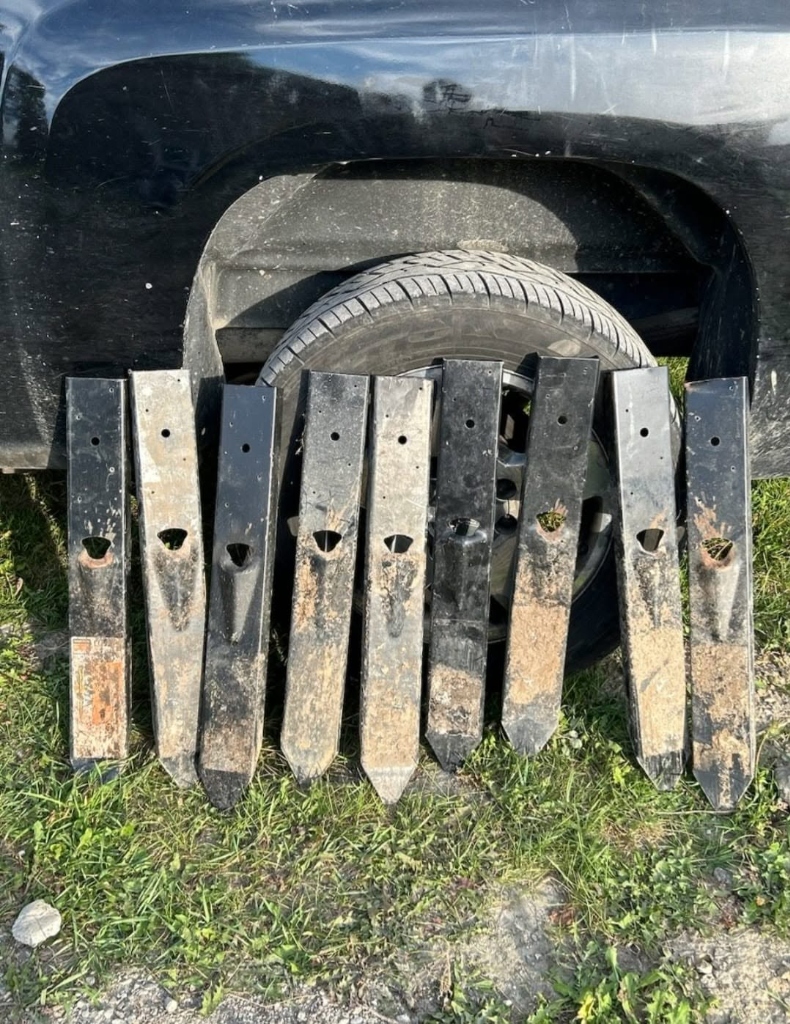
How Lean On Me Replaced Nine Failed E-Z Menders on a Single Job Site
And Toronto is not an outlier. Our documented job archive — every repair photographed — contains 331 projects where failed or failing spike-style hardware is visible at the post base, from Ontario to British Columbia. That covers both families of the hardware-store fix: the hammer-in mender plate (black, fastened up the side of the post) and the spiked post base (the socket that grips only the bottom few inches). Here is a small sample from that archive — different homes, different cities, both products failing:
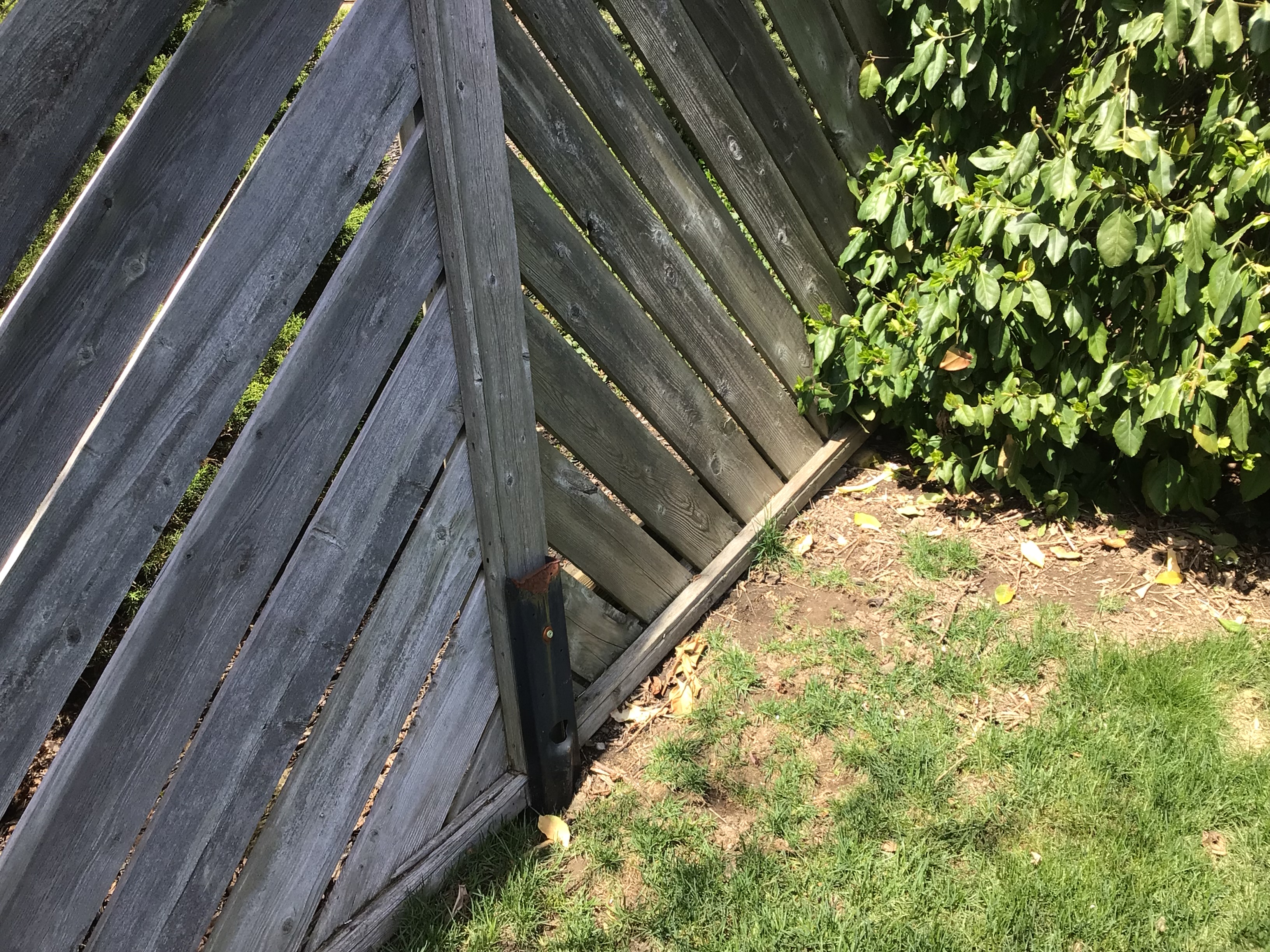
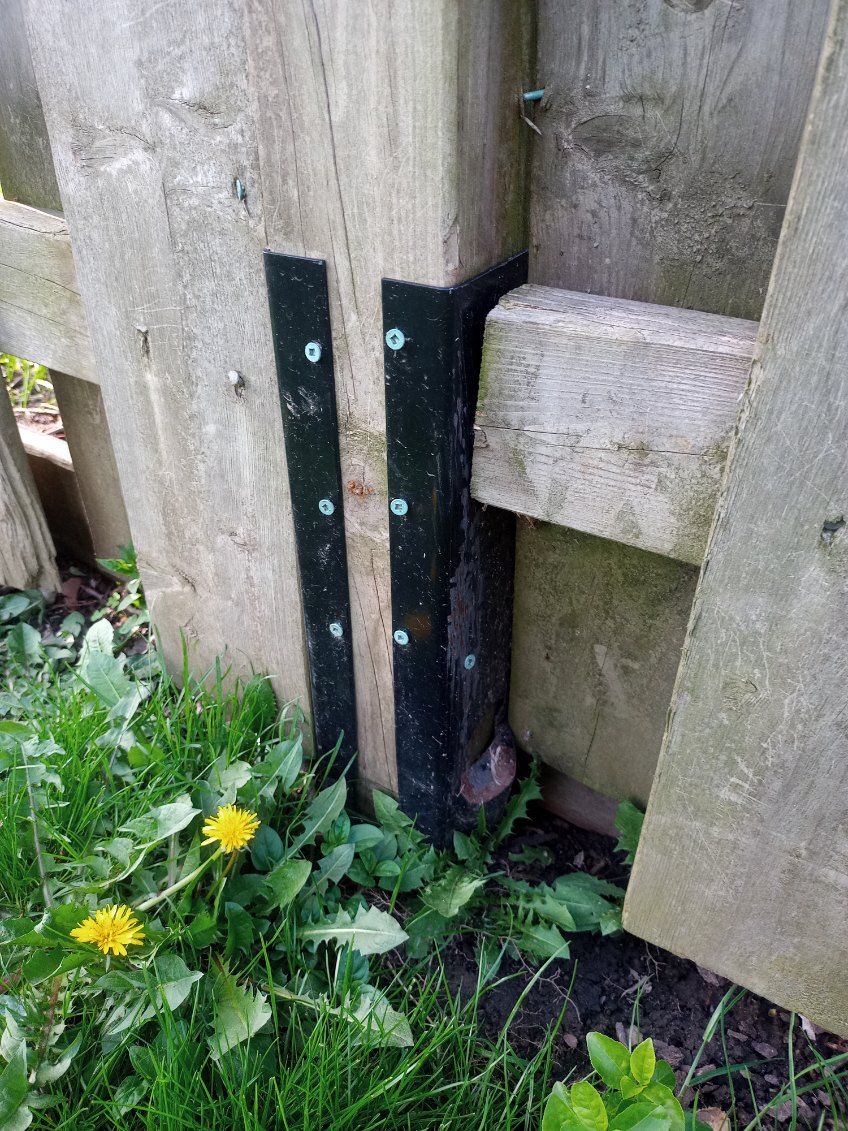
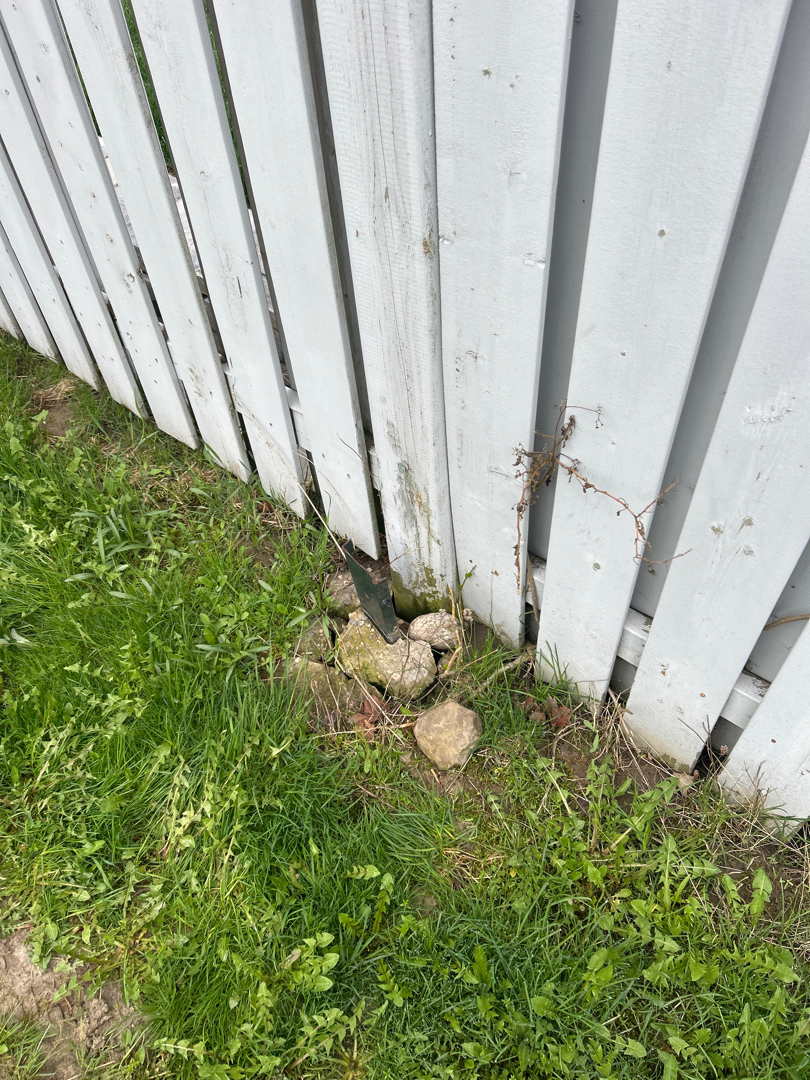
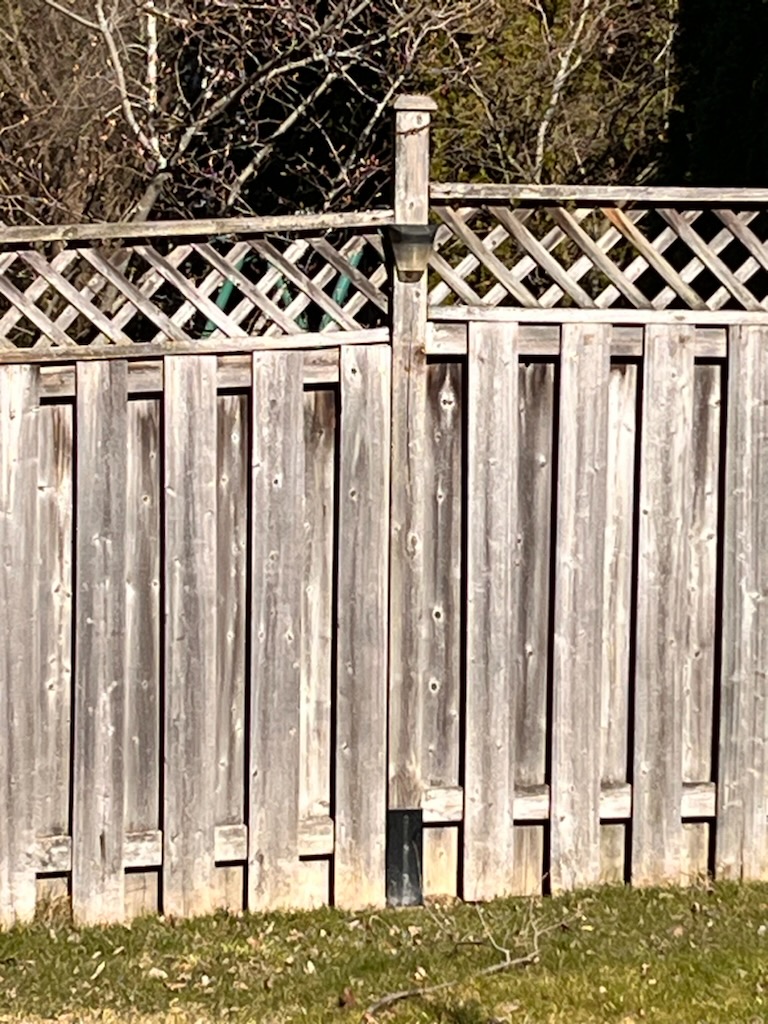
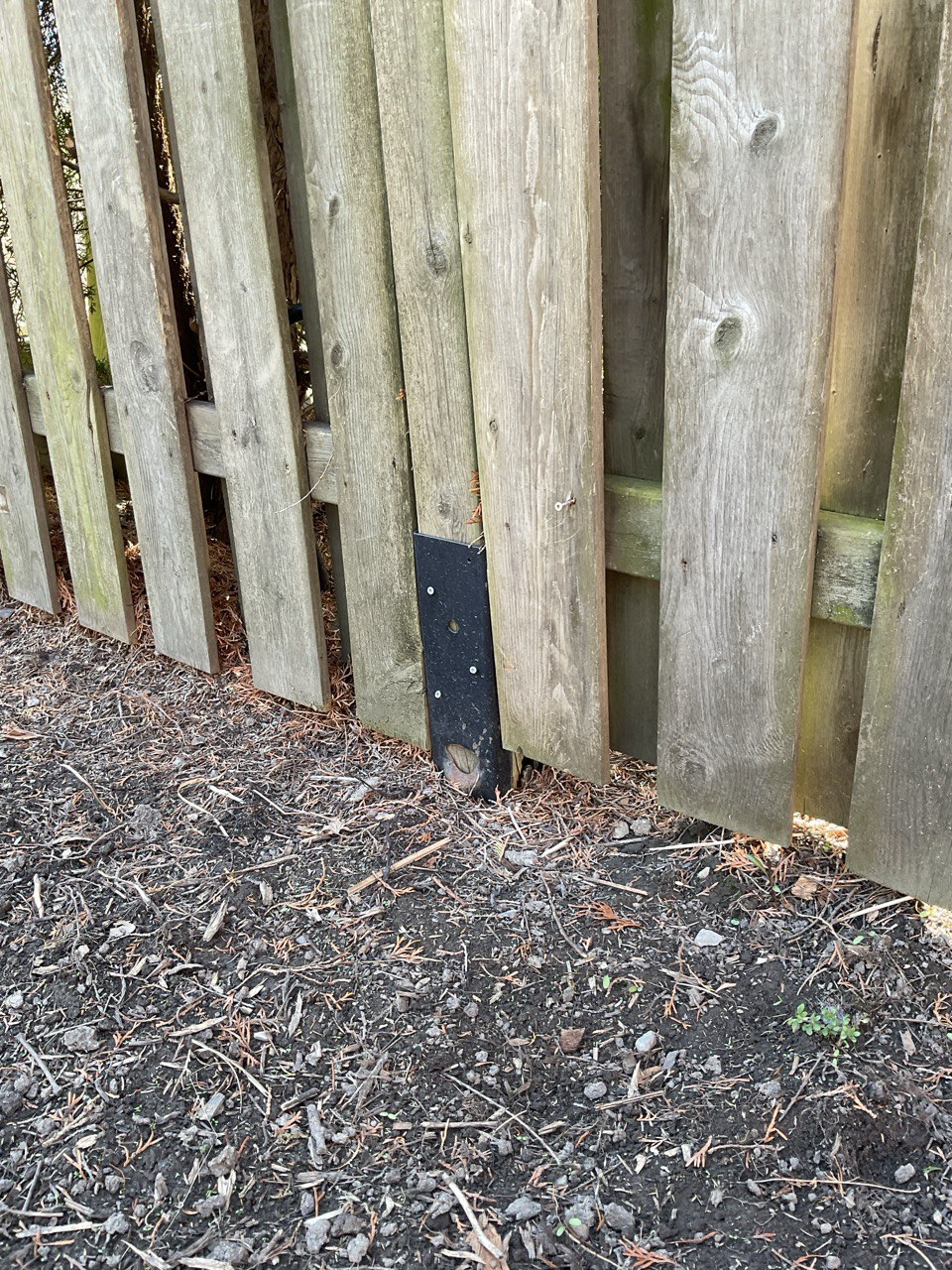
Every photo above is from a real, documented Lean on Me job — and every one of these fences was subsequently restored with in-place post repair rather than replaced. The full photographic record — 31 verified exhibits across 24 Canadian cities, covering E-Z Menders, spiked post bases, surface-mount concrete brackets, and improvised fixes — is published in [The Fence Repair Graveyard](/fence-repair-graveyard).
the community consensus
What the Internet Says: Citing the Proof of Spikes Failing
If you look beyond marketing brochures, the community consensus is clear. Online forums and retailer pages are filled with stories of homeowners who regretted using these spikes.
- **Concrete Footing Interference**: The most common installation failure occurs when the original post is set in concrete. Homeowners on Reddit's HomeImprovement forum report that it is physically impossible to hammer a mender plate between a wood post and a flush concrete footer. Attempting to force it causes the metal to bend and deform before the screws are even put in.
- **Frost Heave and Clay Soil**: In colder climates like Ontario, freeze-thaw cycles cause the soil to expand and contract. Because menders are set above the frost line, frost heave easily pushes the shallow metal plates out of alignment, causing the fence to lean.
- Verified buyers on major retail sites like The Home Depot's FPBM44E Product Page and Lowe's Simpson Strong-Tie Page frequently complain about the loose fit. Since a nominal 4x4 post is actually 3.5 inches by 3.5 inches, standard brackets often have too much play, requiring shims or resulting in a loose, wobbly installation.
the lean on me difference
In-Place Post Repair: The Engineering Behind a Permanent, 10-Year Fix
When a fence post snaps or rots, you don't need a temporary band-aid — you need a permanent structural solution. The method is called [in-place post repair](/in-place-post-repair): repairing the post in its original position by anchoring an engineered steel fixture into a new concrete footing beside the post and fastening it to the sound wood above the rot line. No concrete excavation, no panel removal, no new lumber. Lean on Me pioneered and named this category in Canada, and our fixture design holds Canadian patent D1,055,318.
How the patented fixture differs from a hammer-in spike:
- **Double the Thickness**: Our steel fixtures are approximately twice as thick as standard 12-gauge DIY menders, making them virtually impossible to bend under wind loads.
- **Welded Structural Gussets**: We integrate heavy-duty reinforcement gussets that distribute lateral forces and prevent buckling.
- **Concreted Foundations**: We don't just hammer a spike into loose dirt. A compact auger footing is poured beside the post, ensuring the repair anchors into solid ground — below the reach of the frost heave that pushes shallow spikes out of alignment.
And unlike a spike, this claim is measured, not promised: across the 30,000+ customers Lean on Me has served, only 222 repairs have ever required a warranty visit — a callback rate of about 0.7% under our 10-year warranty, which covers both labour and materials. The full numbers — failure timelines, repair economics, and warranty outcomes from our digitized records — are published in [The Canadian Fence Post Failure Report](/fence-post-failure-report).
Cost Breakdown
Repairing a fence post using temporary DIY spikes costs around $30 to $50 per post in materials, but will need to be redone when it fails.
| Service Type | Estimated Cost |
|---|---|
| A professional Lean on Me in-place post repair | $200 per post — our average repair visit runs about $730 before tax and covers roughly 3 posts — providing a permanent solution with a 10-year warranty |
| Full fence replacement | $5,000 to $20,000, and as documented in our Failure Report, it consumes roughly 15 mature trees (each around 30 years old at harvest) per 180-foot fence while putting the new posts on the same short lifespan clock that failed the old ones |
You can price your exact repair in under a minute with our [instant quote calculator](/lead-form): answer three basic questions — how many posts need repair, the post size (4x4 or 6x6), and your postal code — and the calculator returns your price instantly, with volume-based pricing applied automatically (the per-post price drops as the post count rises).
Frequently Asked Questions
Can I use E-Z Menders if my post is set in concrete?
It is extremely difficult. If the concrete is poured flush with the post, there is no gap to drive the mender in. You will likely bend the mender or have to chip away the concrete first, which is incredibly labor-intensive. In-place post repair sidesteps the problem entirely: the fixture anchors into its own compact footing augered beside the post, so the existing concrete never needs to come out.
How long do hammer-in post spikes last?
In ideal soil conditions with low wind, they may last 1 to 3 years. However, in climates with high winds or freeze-thaw cycles (like Canada), they frequently fail within the first year. Lean on Me's job-site photo archive documents 331 separate projects with failed spike anchors visible at the post base.
Why does Lean on Me remove so many of these products?
Because homeowners discover they are only temporary. Our crews cut off and replace roughly a hundred failed spike installations every year — 43 were itemized in just the first four months after we began tracking them as their own line item in March 2026, and our job-site photo archive documents 331 projects with failed spike hardware at the post base. After a year or two of wobbling and leaning, customers call us for in-place post repair: a permanent, concrete-set structural fix at the actual failure point.
What is in-place post repair?
In-place post repair is the structural repair of a failed wooden fence post where it stands: an engineered steel fixture is set in a compact concrete footing beside the post and fastened to the sound wood above the rot line. No digging out the old footing, no removing panels, no new lumber. Lean on Me pioneered the category in Canada (patent D1,055,318) and has repaired 70,000+ posts since its founding.
Do you offer a warranty on post repairs?
Yes, all Lean on Me post repairs are backed by our 10-year structural warranty — and the warranty is measured, not just promised: only 222 warranty visits across the 30,000+ customers we have served — a callback rate of about 0.7%, with labour and materials included.