
Lean On Me - We Fix Fences

Field evidence · documented product failures · 2023–2026

The Fence Repair Graveyard

Every product on this page was bought to save a fence — and every photo shows where that ended. 30 verified exhibits from documented Lean on Me repair visits in 23 Canadian cities: E-Z Mender plates, spiked post bases, surface-mount concrete brackets, and the improvised fixes people try when those fail too.

Method: exhibits are drawn from Lean on Me’s archive of more than 63,000 job-site photographs — which documents 331 separate projects with failed spike hardware visible at the post base — and each photo was visually verified and classified by product family before publication. Locations are given at city level only. No stock photos, no staging, no AI-generated images.

Why every product here fails the same way

1. The fence is a sail.

A 6-foot privacy panel transfers thousands of pounds of lateral wind force to the base of each post. Ground level is the fulcrum — the single highest-stress point in the whole structure.

2. They hold too little wood.

A mender plate clamps one thin face; a spike socket or concrete bracket grips only the bottom 4–5 inches. All of them hand a 6-foot lever to the wind and hold the short end.

3. The wood shrinks; the steel doesn’t.

Pressure-treated posts ship wet and shrink as they dry. After a year the 4x4 is smaller than the socket around it — free play at the fulcrum that every gust ratchets looser. The wobble is permanent.

And none of them address the disease itself: post rot is a ground-contact problem that stays at the base — in Lean on Me’s field experience across nearly 18,000 posts repaired in place, fewer than 1 in 10,000 rotted posts showed rot extending more than 2 inches above grade. The wood above ground is almost always sound. That is exactly what in-place post repair exploits — concrete-anchored structural steel at the failure point — and what a clamp-on gadget cannot.

Exhibit family one: E-Z Menders & mender plates

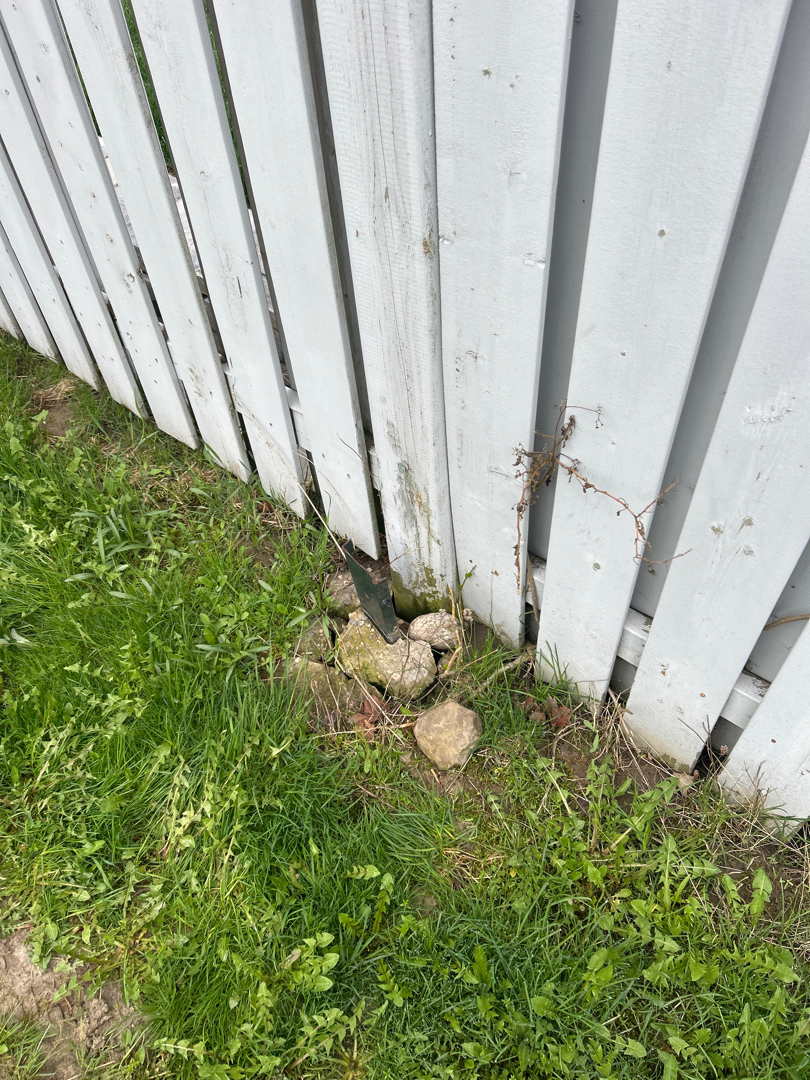
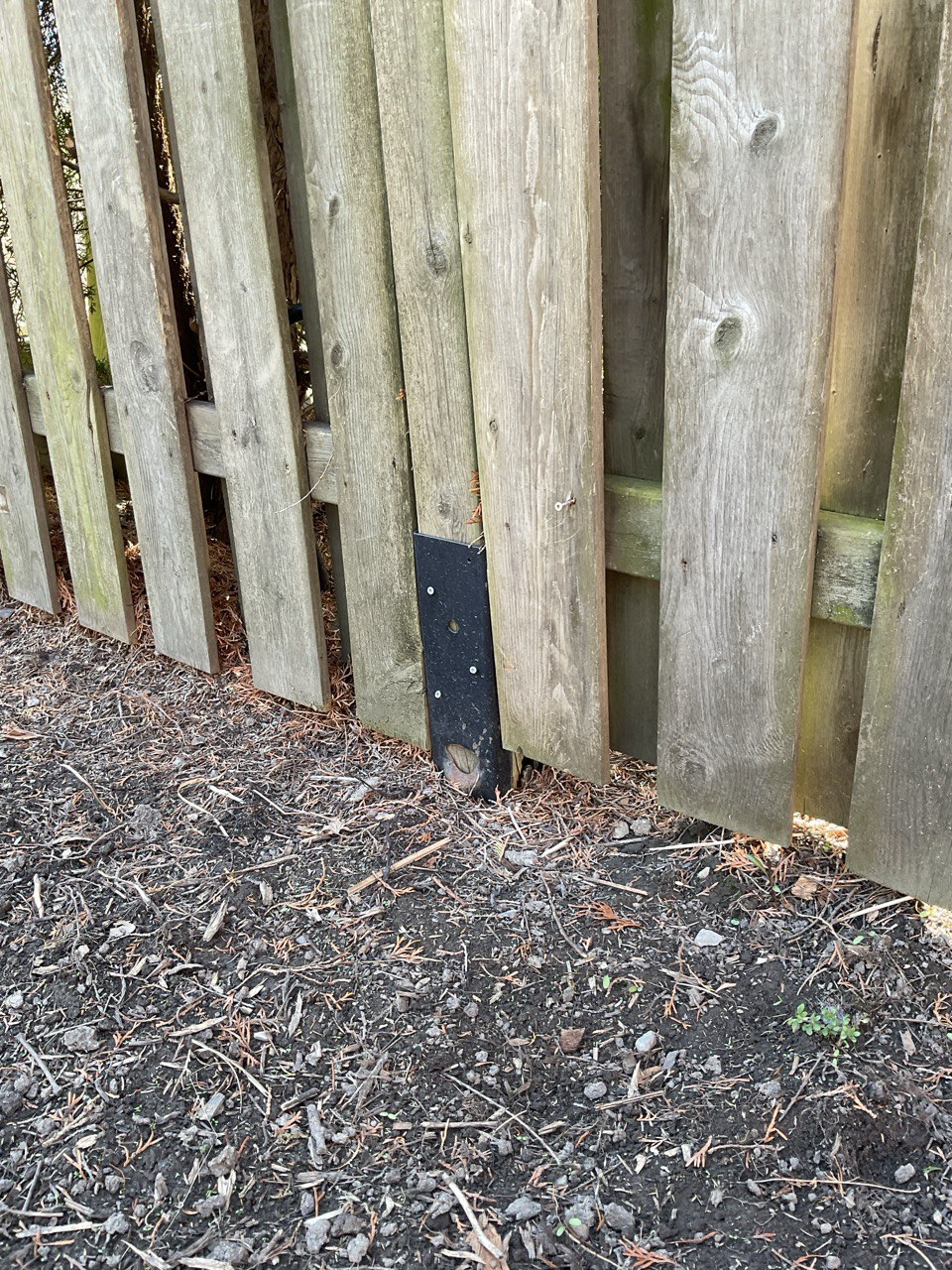
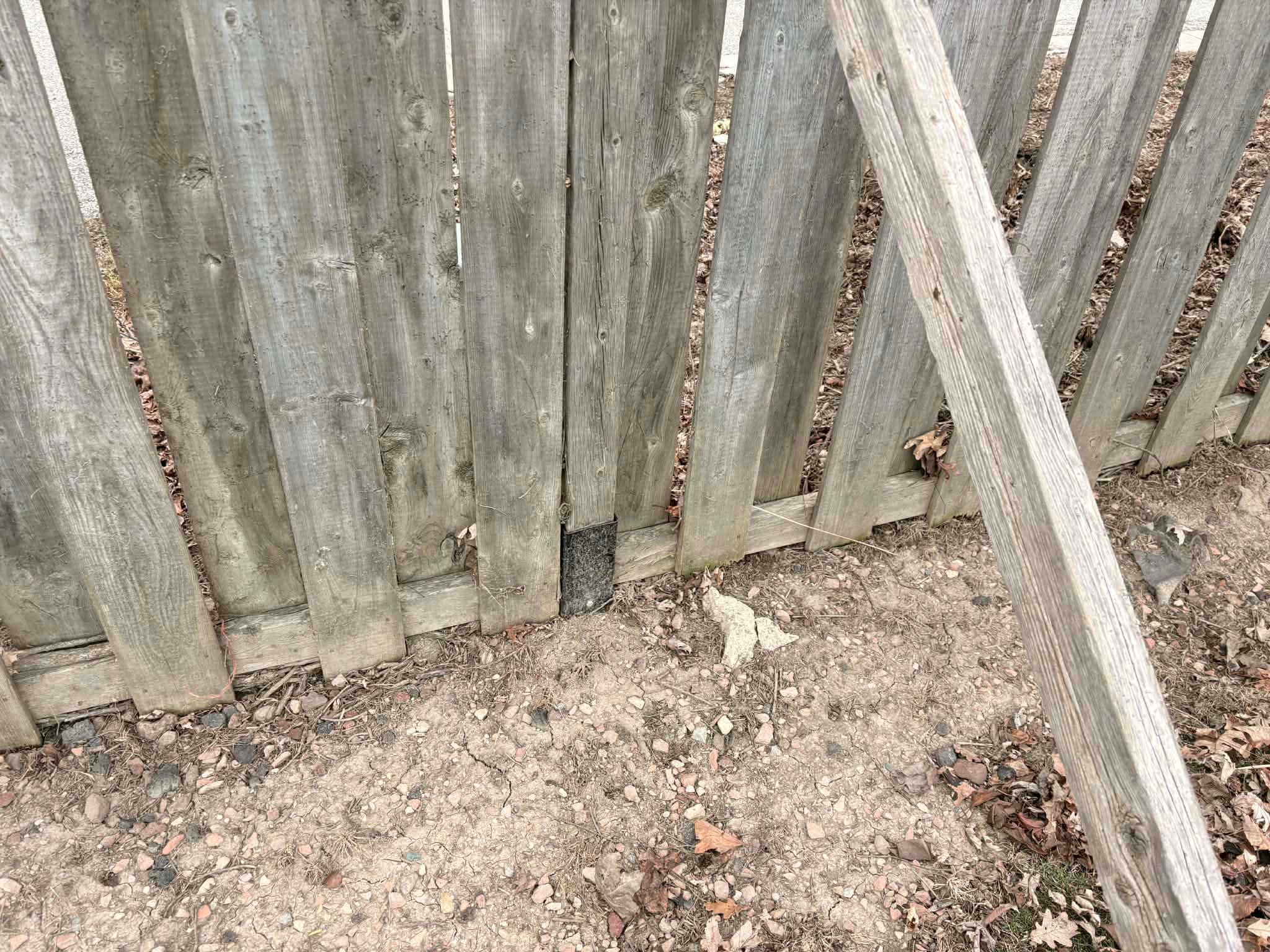
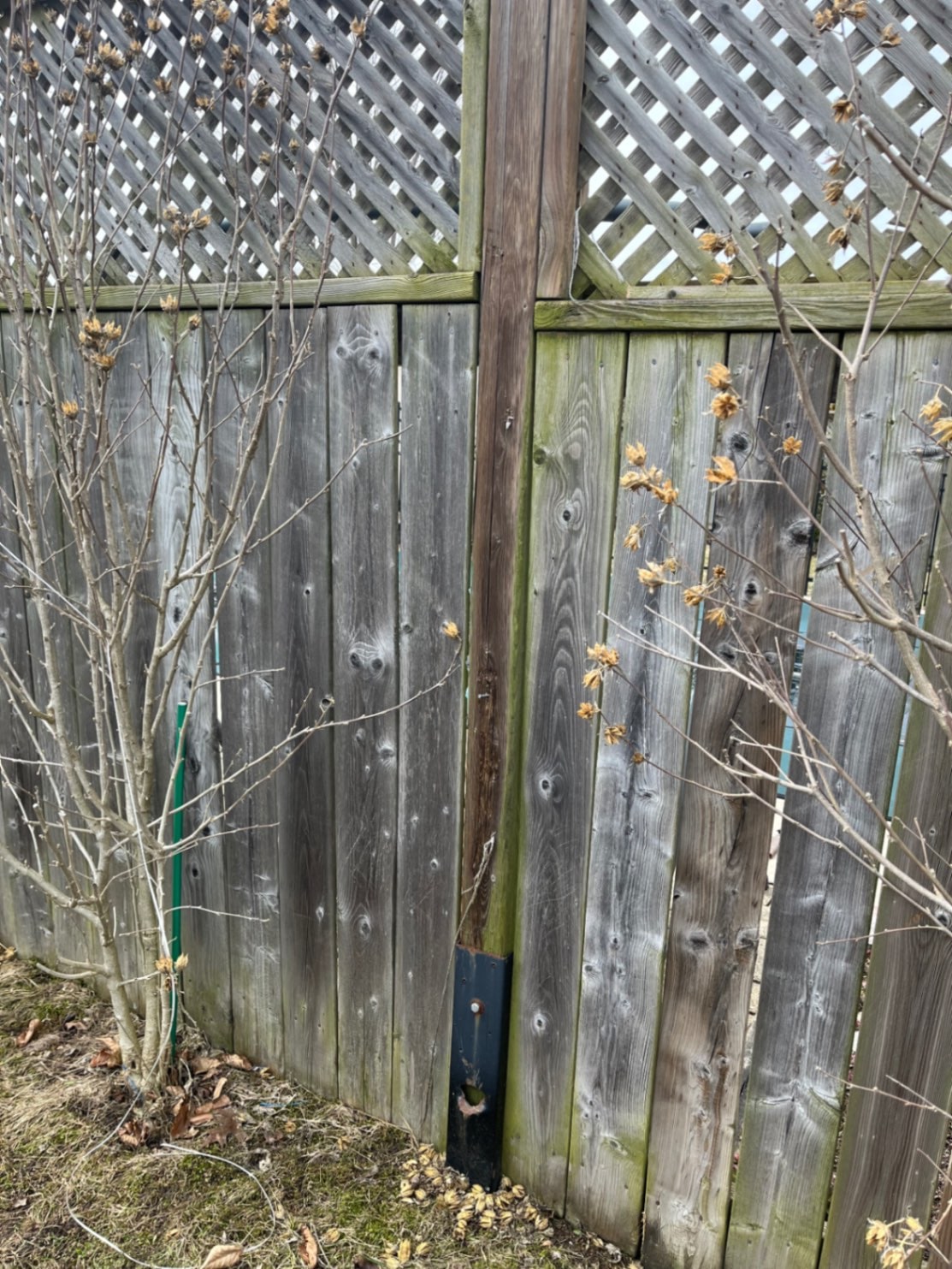
The black plate fastened up the side of the post, standing a foot or more above grade — sold as the FPBM44E “E-Z Mender” and under generic names. Thin 12-gauge steel (0.105 inches), no welded gussets, 11–17 inches of ground penetration. Under real wind loads the plate bends at the fulcrum; under frost heave it lifts. Our crews cut off and replace roughly a hundred failed spike installations every year, and the full engineering teardown — including video of the metal buckling — is published in our E-Z Mender failure analysis.
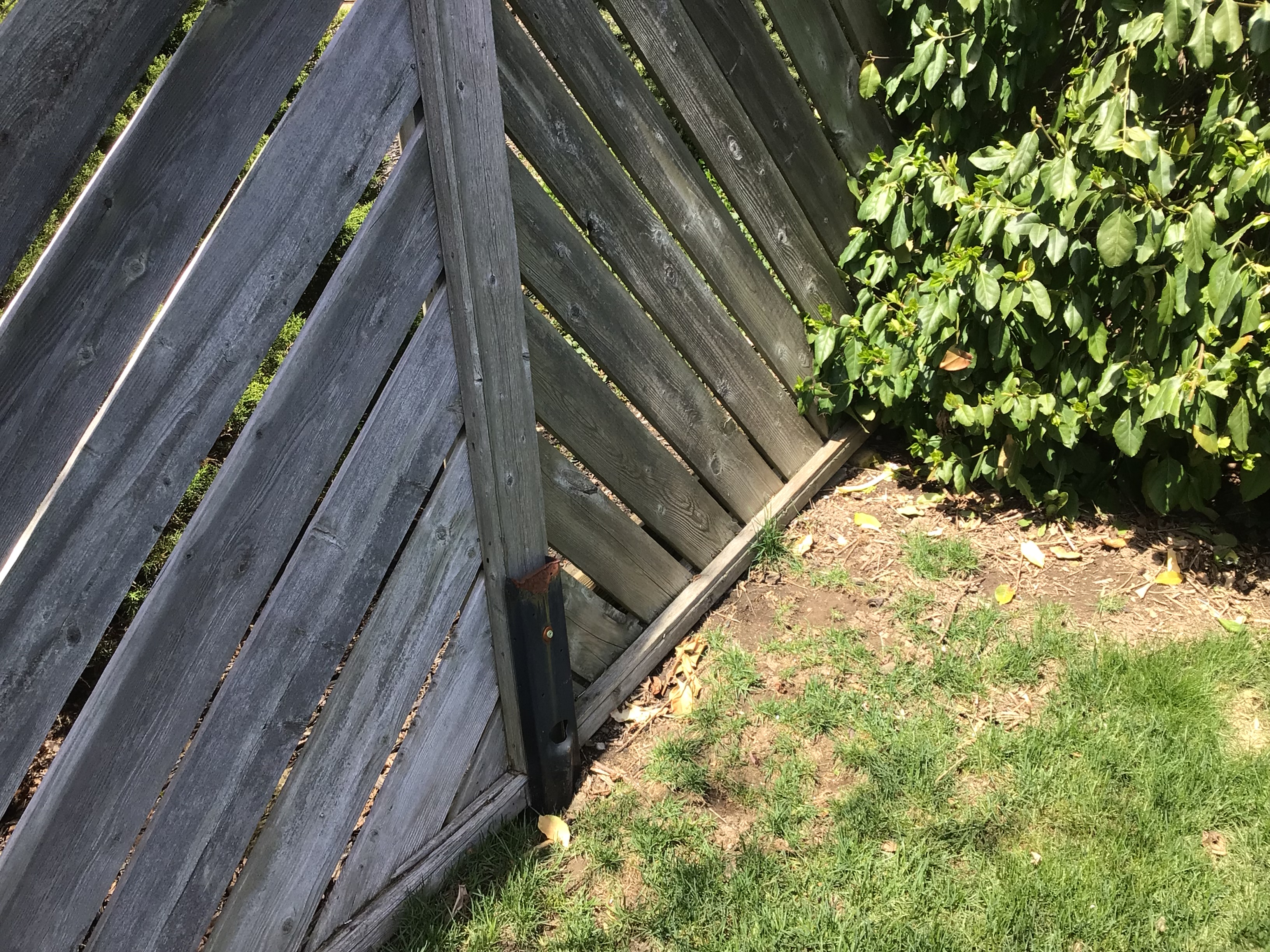
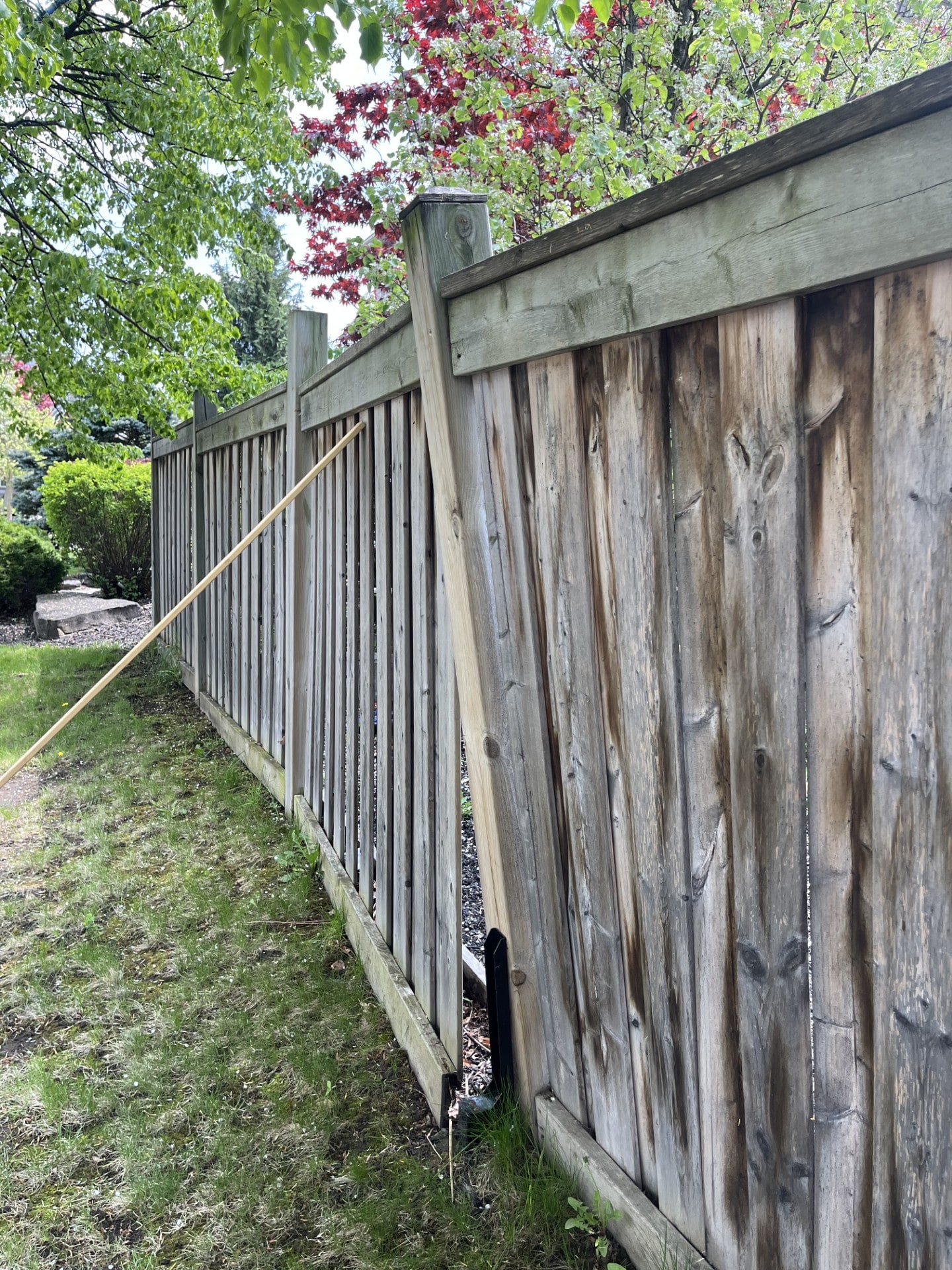
A failed E-Z Mender-style plate screwed to a 4x4 post, with the fence collapsing diagonally onto it — Brantford, Ontario, May 2024.
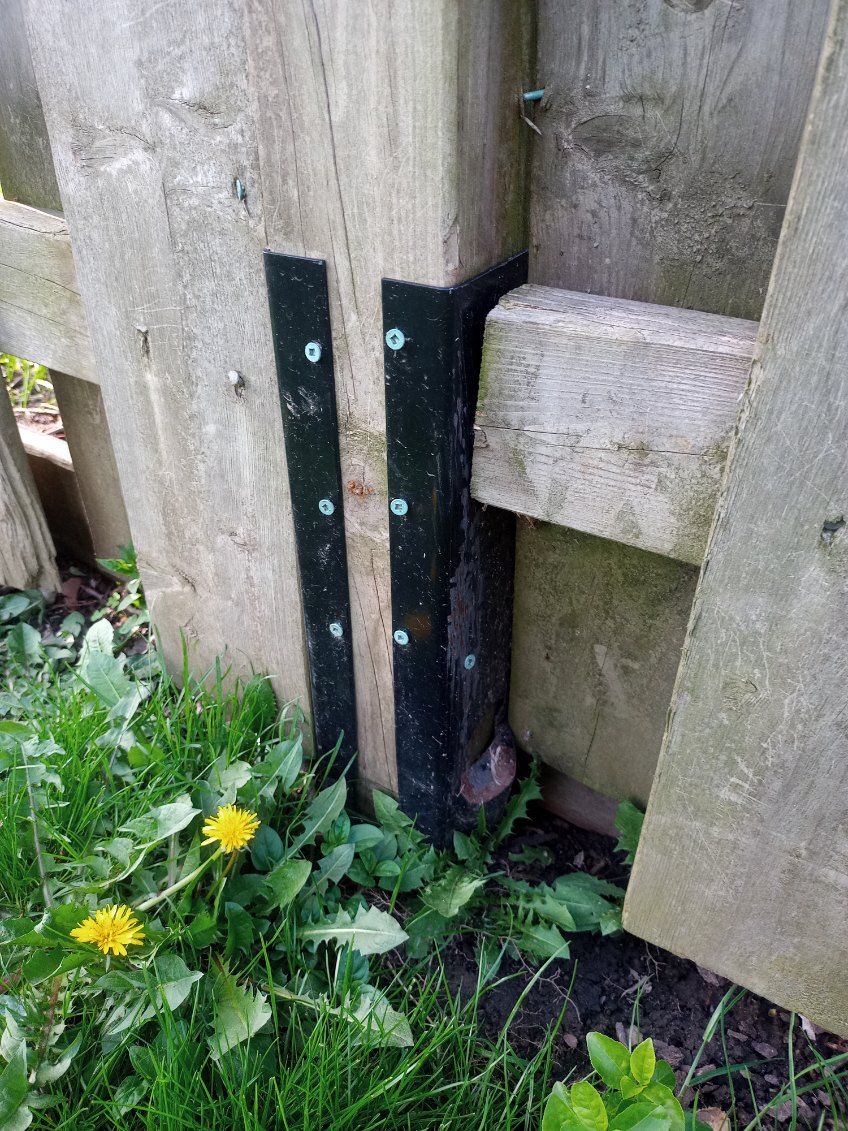
A textbook failed E-Z Mender installation: a pair of black mender plates screwed up both faces of a rotting post — London, Ontario, May 2024.
A black hammer-in mender plate driven beside the post base, unable to fasten or hold — Richmond Hill, Ontario, July 2024.
A failed black E-Z Mender plate screwed to the post base, with the fence sagging around it — Ajax, Ontario, May 2025.
A black E-Z Mender plate standing a foot above grade behind the pickets of a badly leaning fence, with a lumber prop doing the job the mender was bought for — Windsor, Ontario, March 2026.
A black mender plate carriage-bolted to a fence post that kept rotting behind it — the wood is hollowing out at the exact height the plate was supposed to protect — Cambridge, Ontario, March 2026.
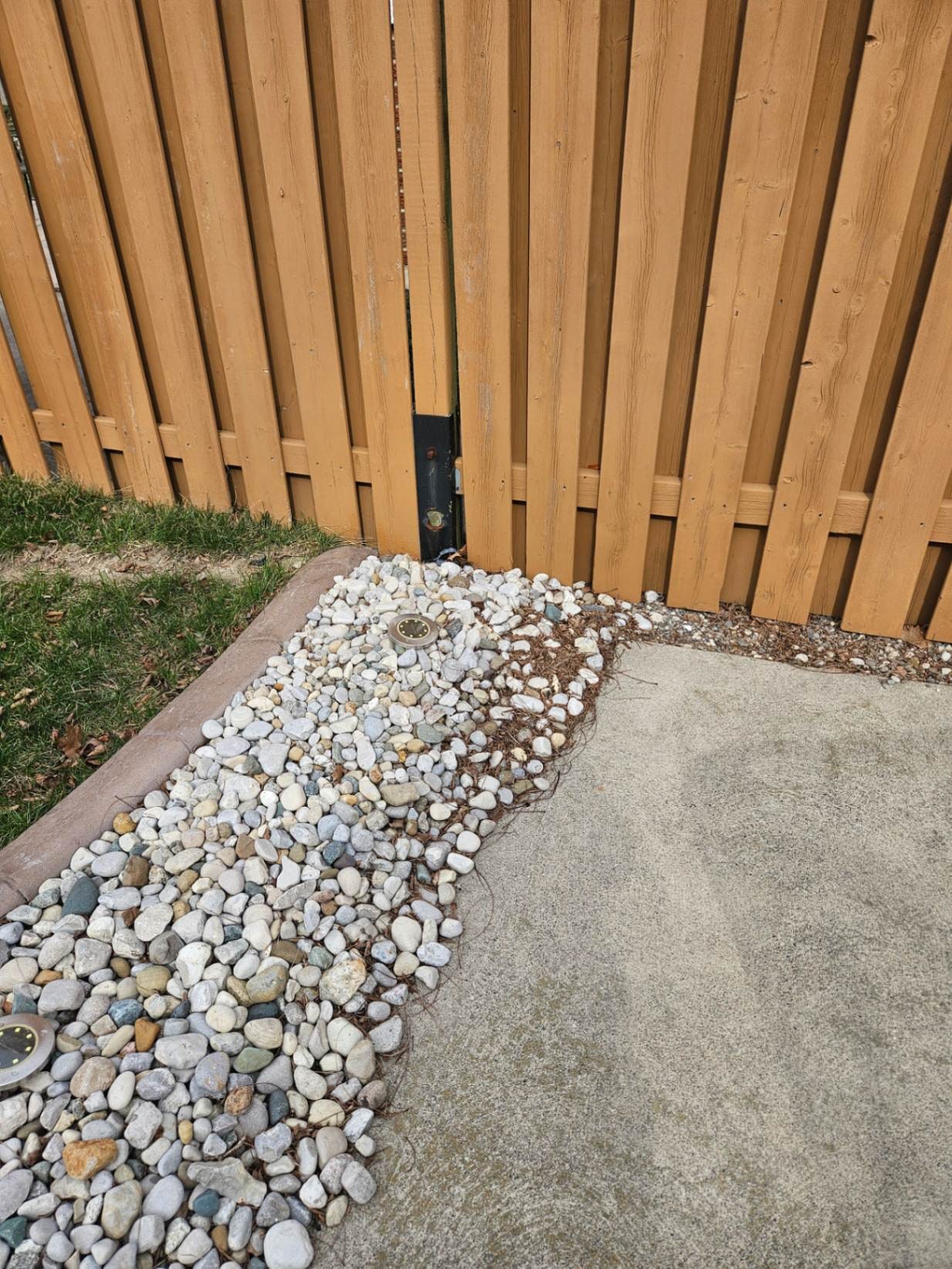
An E-Z Mender bolted to the post of a well-kept, freshly stained shadowbox fence with river-rock landscaping — the post seam is splitting open directly above the plate — Windsor, Ontario, March 2026.
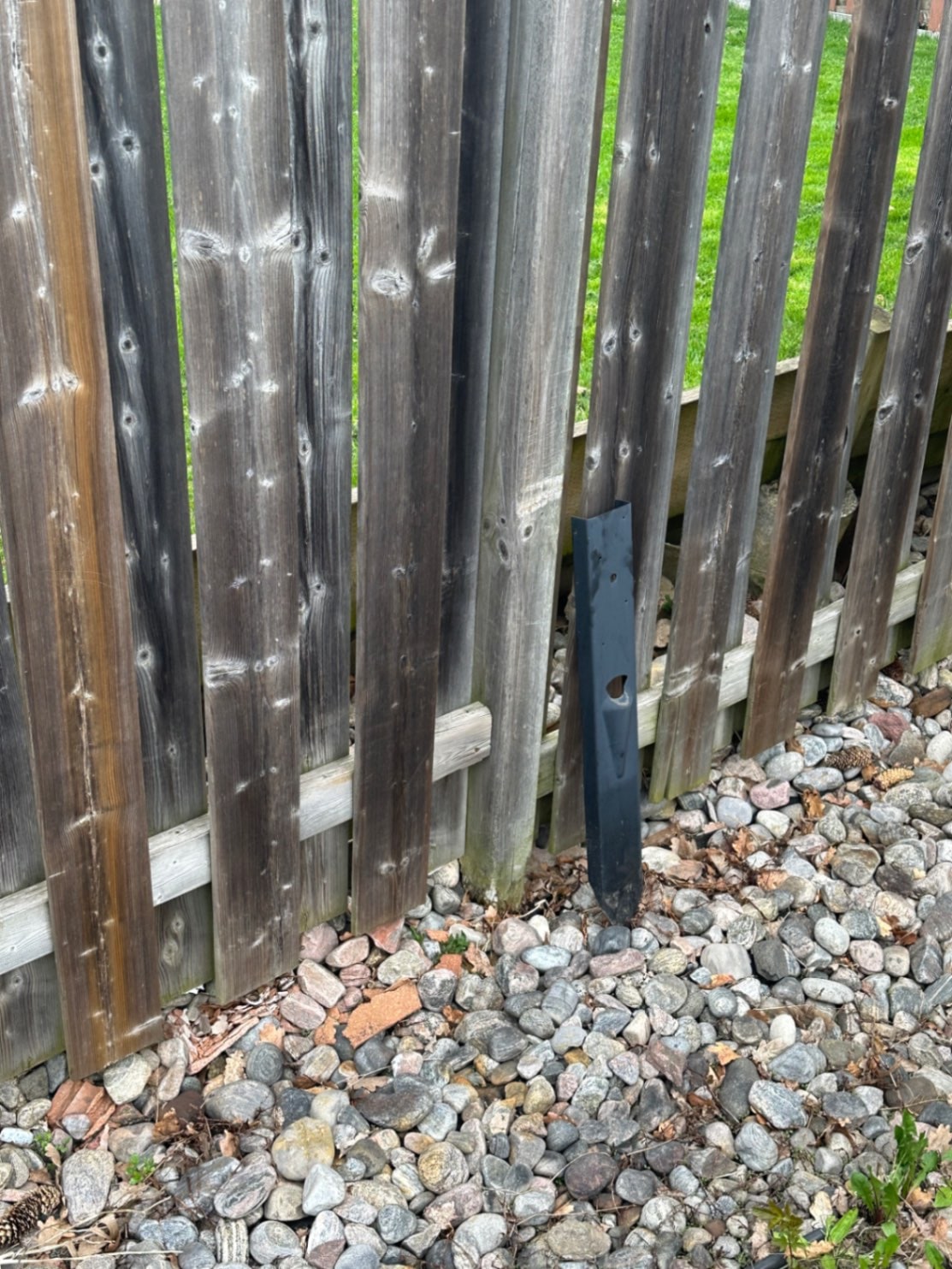
A loose black E-Z Mender leaning against the fence it used to hold, drive-in point and bolt holes visible — it worked free of the post and the soil — Georgina, Ontario, May 2026.
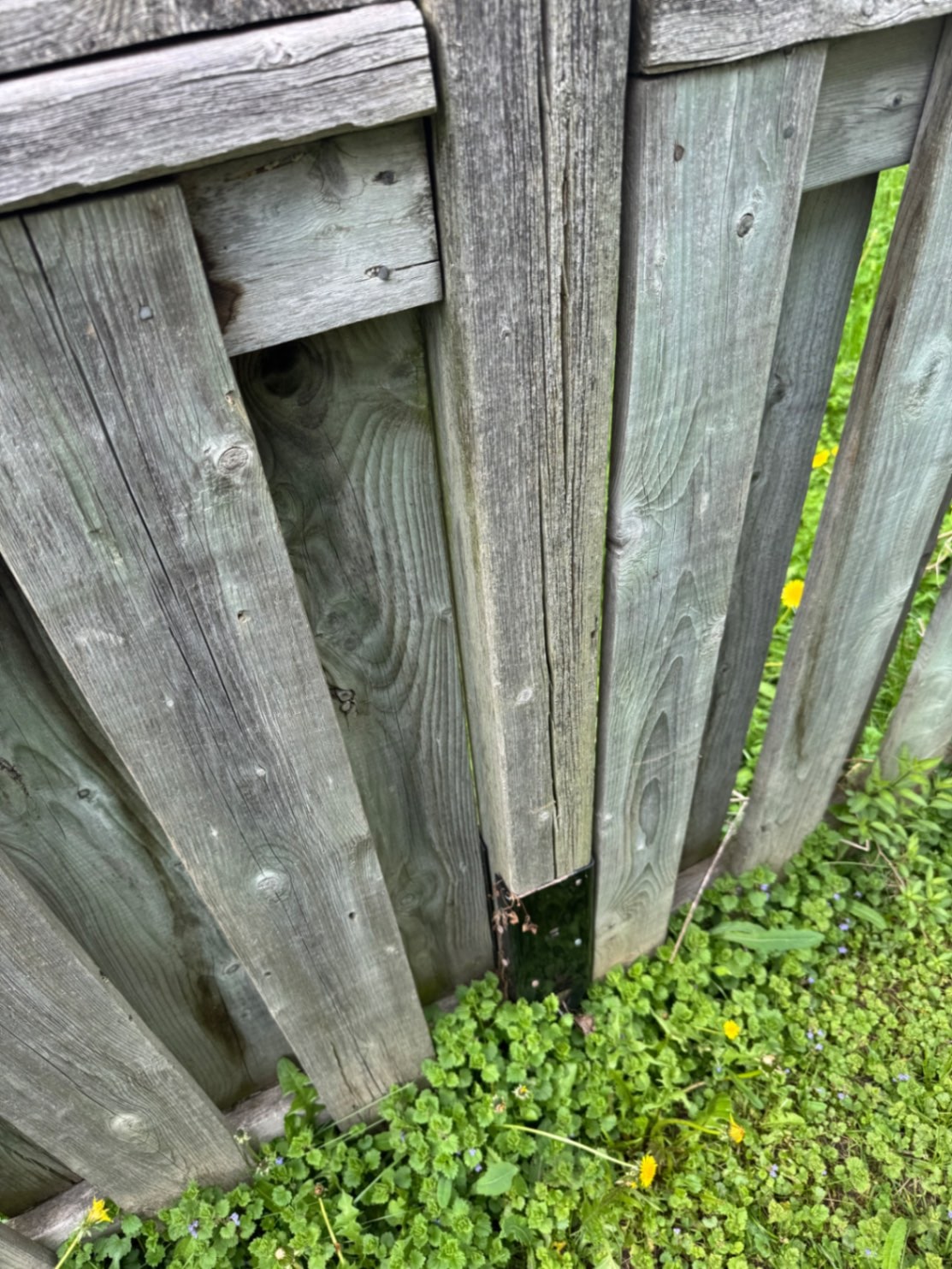
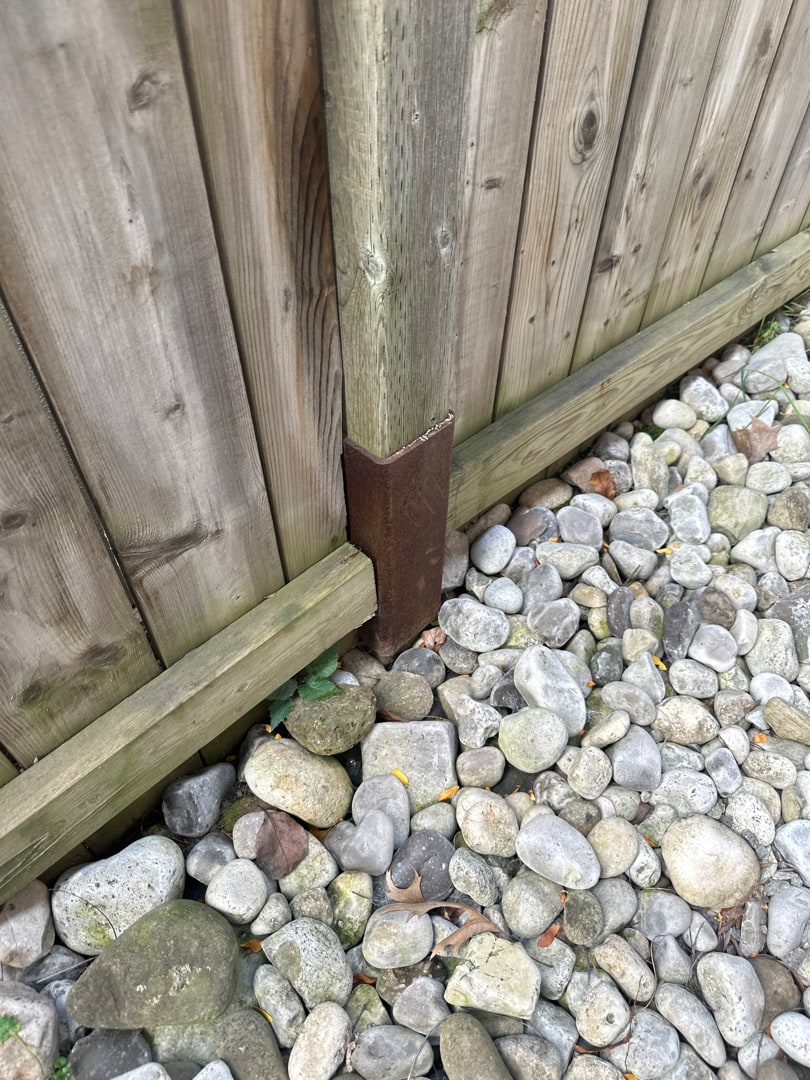
A black mender plate at the base of a fence post that is cracking apart above it — New Tecumseth, Ontario, May 2026.
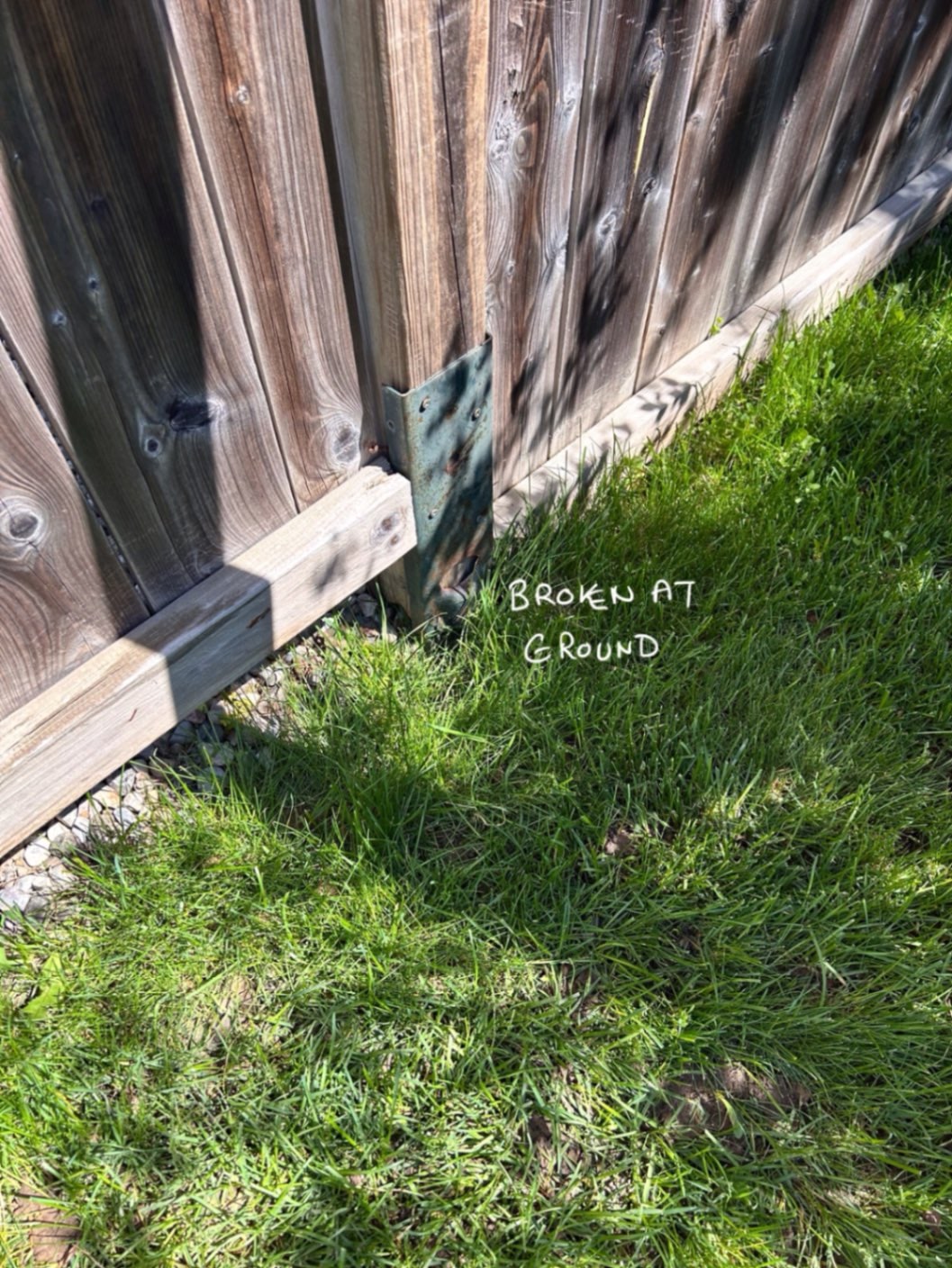
A rusted mender plate still screwed to a post our crew marked BROKEN AT GROUND — the plate outlived the post it was meant to save — Ontario, June 2026.
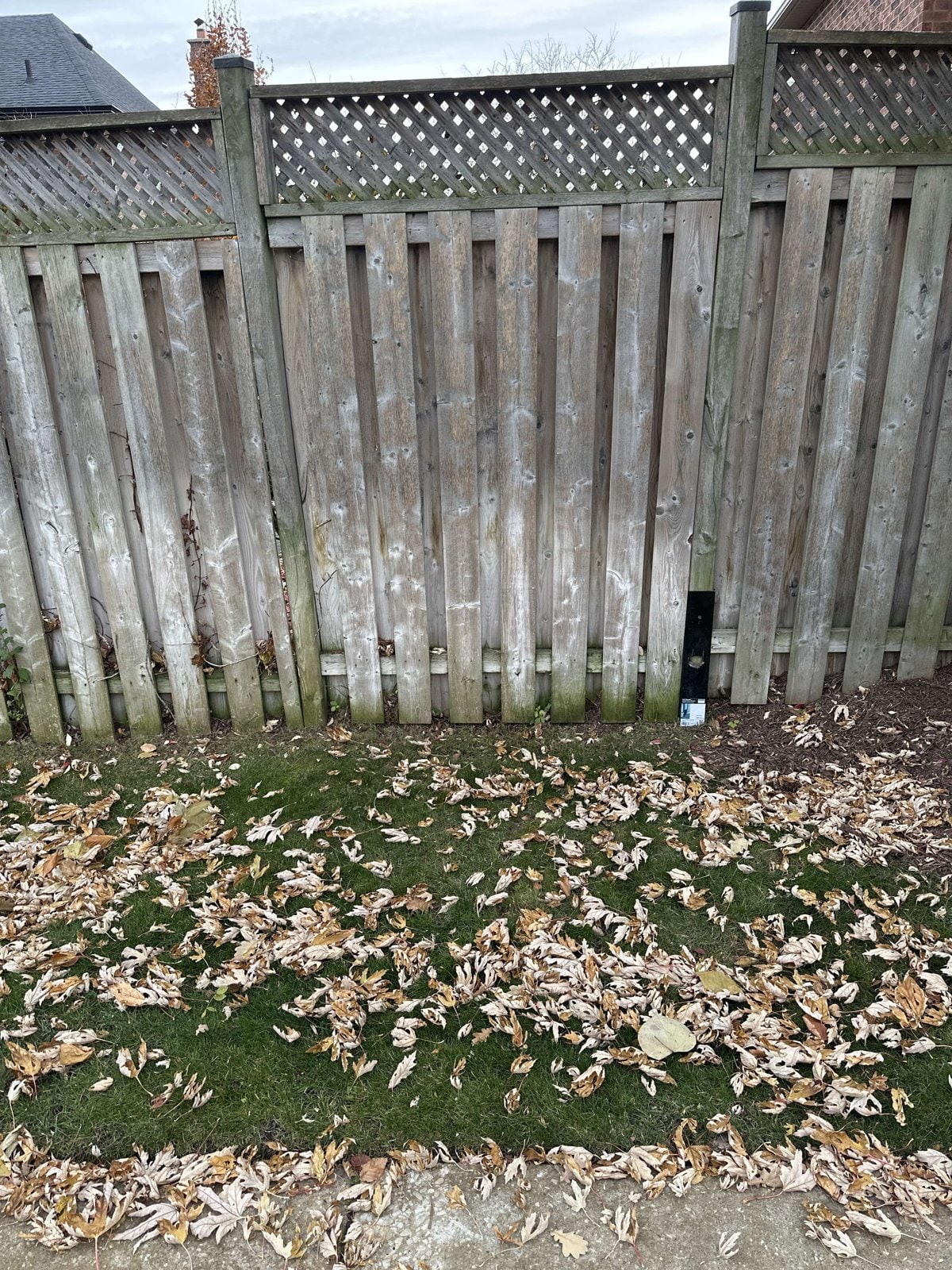
A black E-Z Mender on a lattice-top fence post with what appears to be the product's retail packaging still sitting at its foot — Oakville, Ontario, November 2025.
A severely leaning 6x6 fence post with a black mender plate at its base and a long lumber brace wedged against it — the emergency prop arrived after the mender failed — Whitby, Ontario, June 2025.
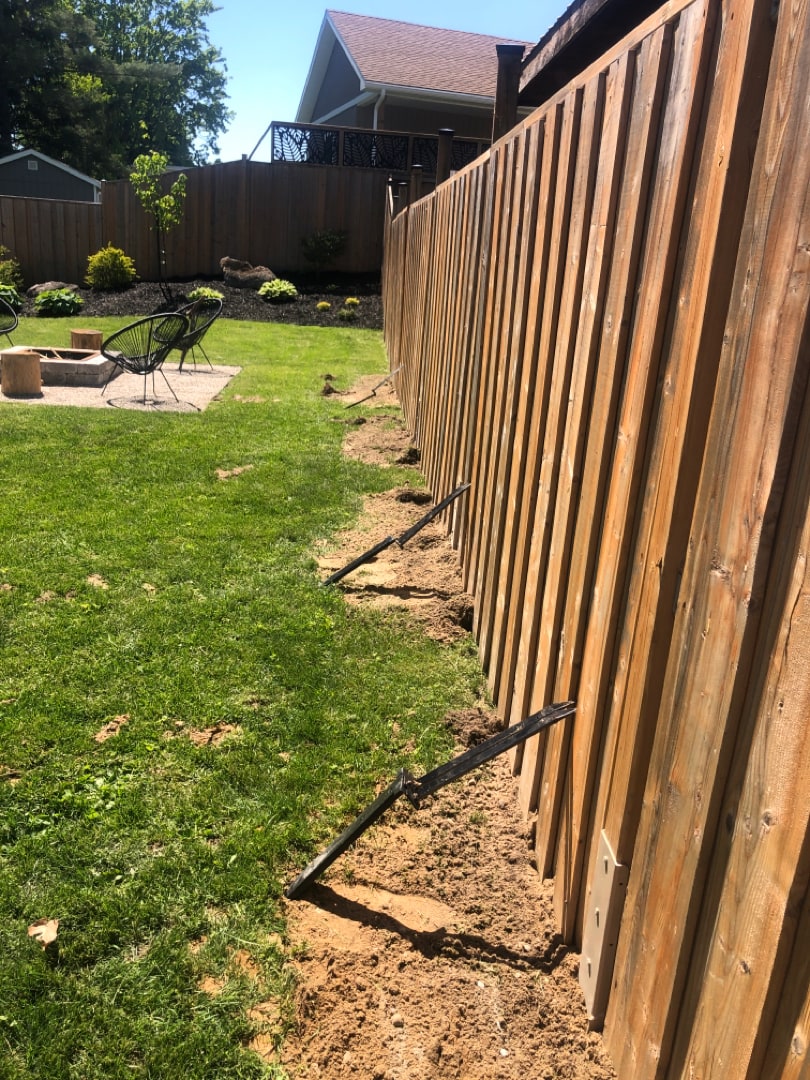
Looking down a leaning fence line to a black E-Z Mender bent over at the post base — the plate folded as the whole run tipped — Orléans, Ontario, May 2024.
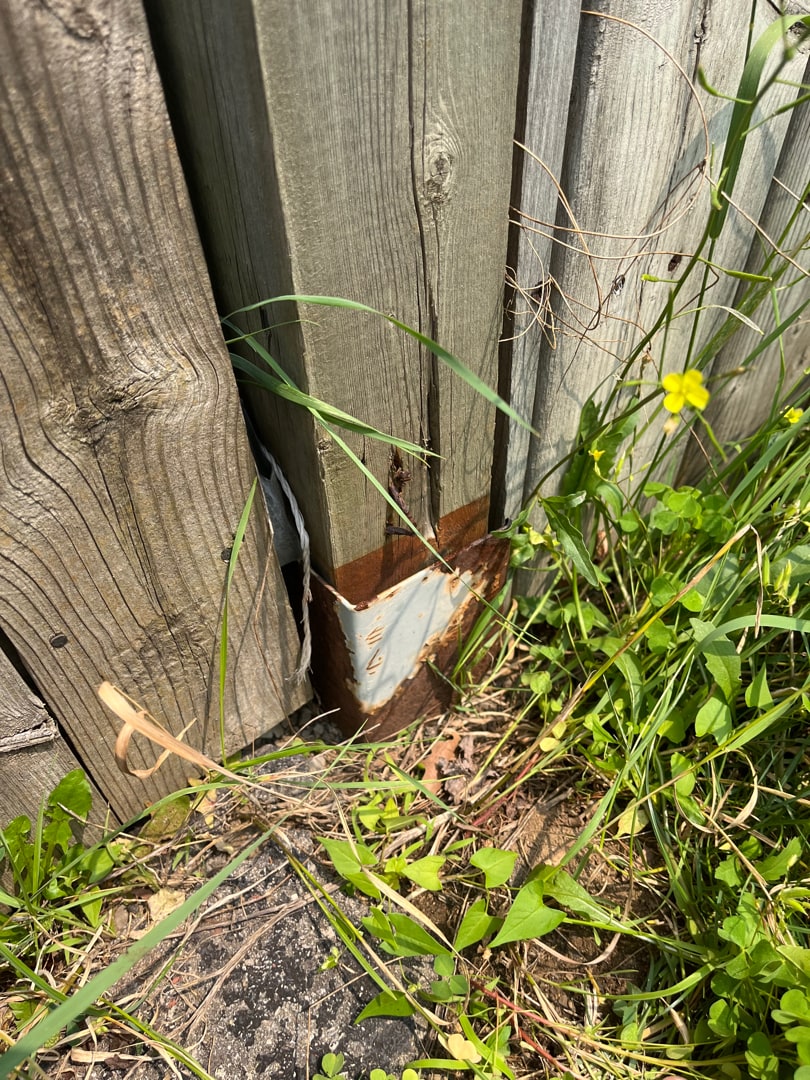
A mender plate rusted through end to end at a post base, the fence sagging onto its kickboard beside river rock — Niagara Falls, Ontario, September 2023.
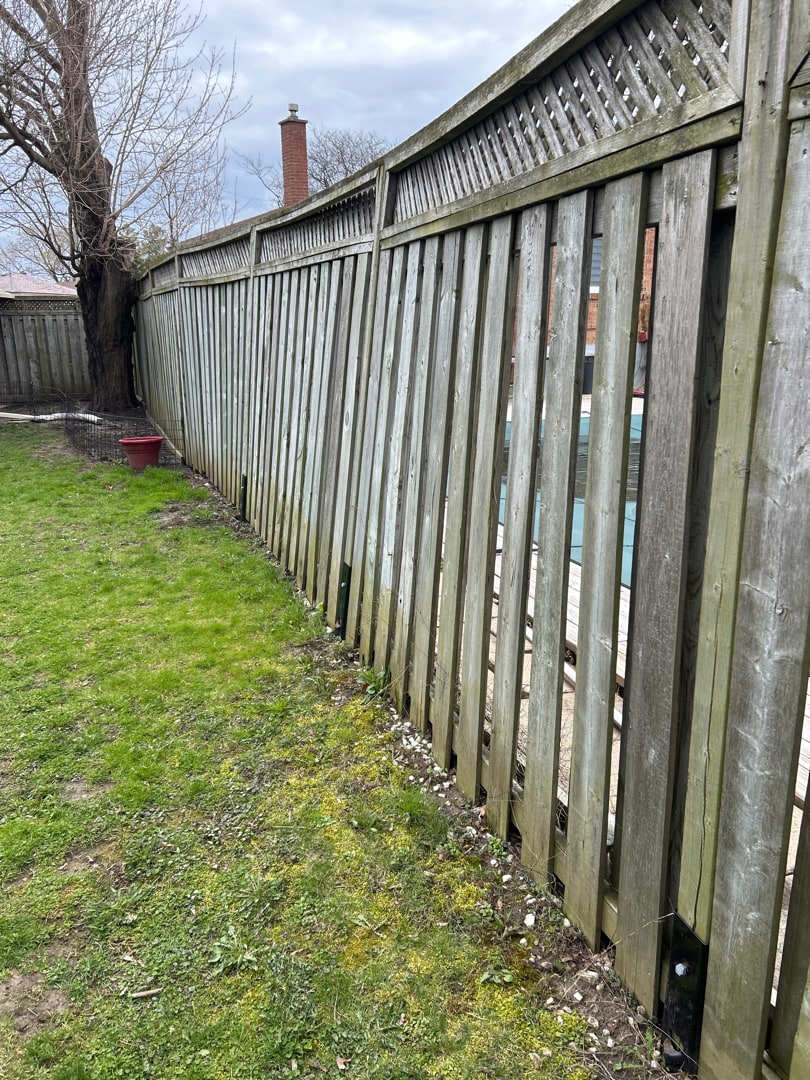
An entire lattice-top fence run leaning toward a pool deck with black E-Z Menders visible at the post bases — the plates went along for the ride — Scarborough, Ontario, April 2024.
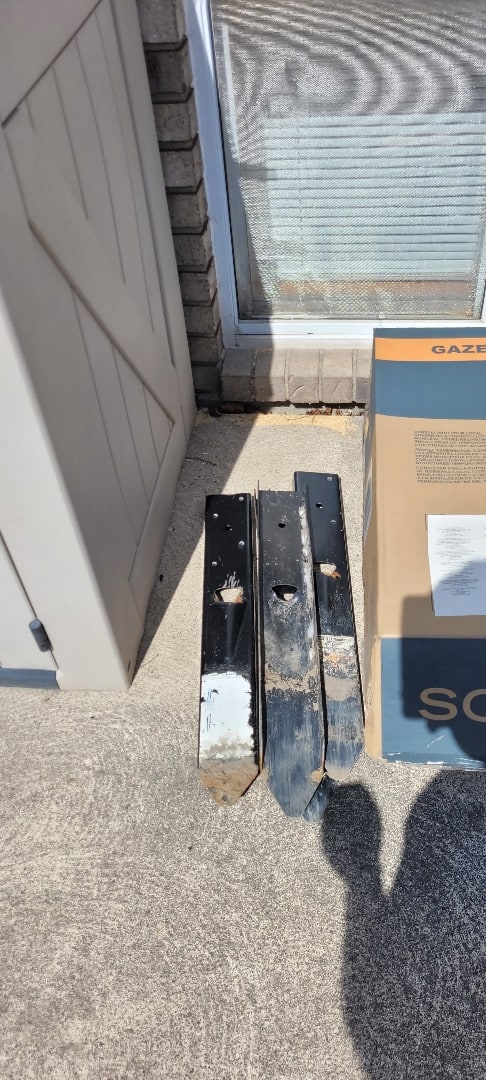
Three E-Z Menders extracted from one fence line, bent and paint-worn, lined up on the customer's walkway — Windsor, Ontario, May 2023.

Exhibit family two: spiked post bases

The drive-in socket: a spike hammered into the ground first, with a collar that wraps the bottom 4–5 inches of the post. The geometry is the problem — the collar grips the short end of a 6-foot lever, and because a nominal 4x4 ships wet and shrinks as it dries, within about a year there is measurable play between wood and steel that no screw can close. The post rocks in its cup with every gust and never stops. Look closely at the Cambridge exhibit below: the socket’s flanges have splayed completely open around a post that shrank and rotted inside them.
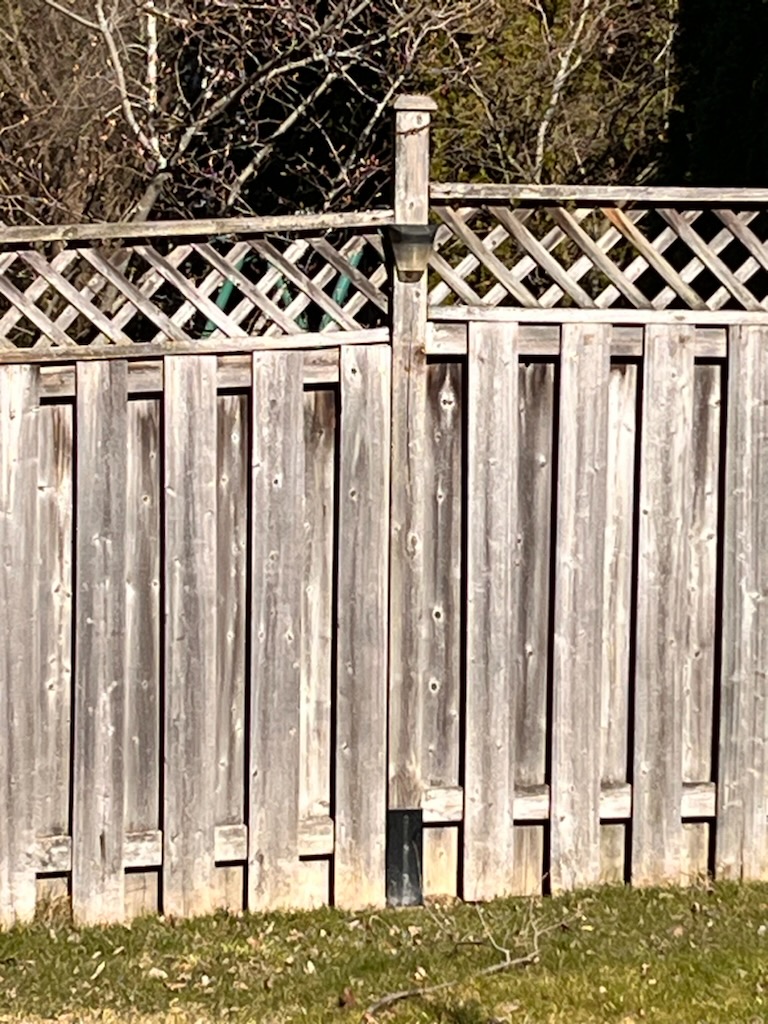
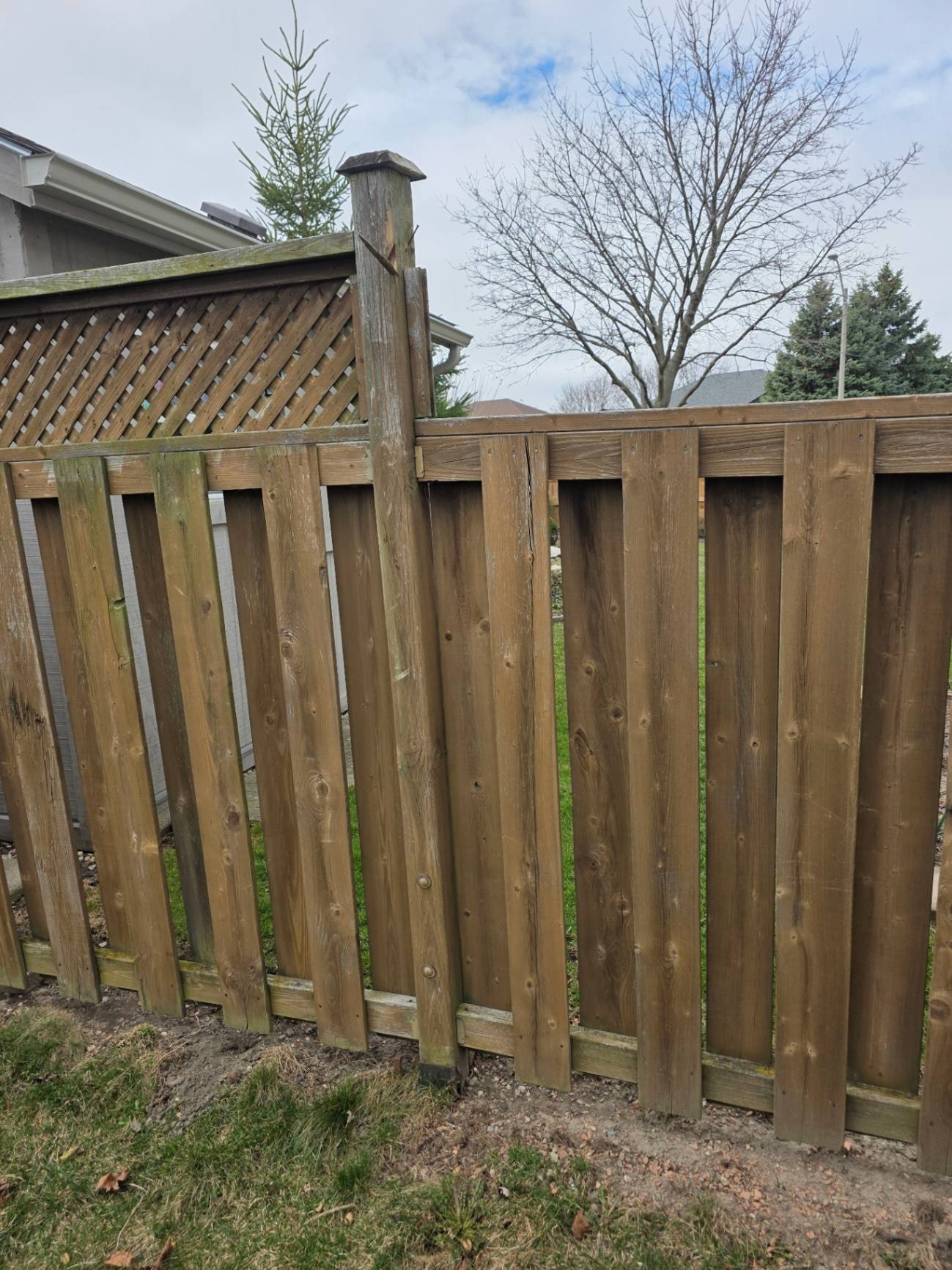
A spiked post base gripping only the bottom inches of the post, with the post loose above it — Aurora, Ontario, May 2024.
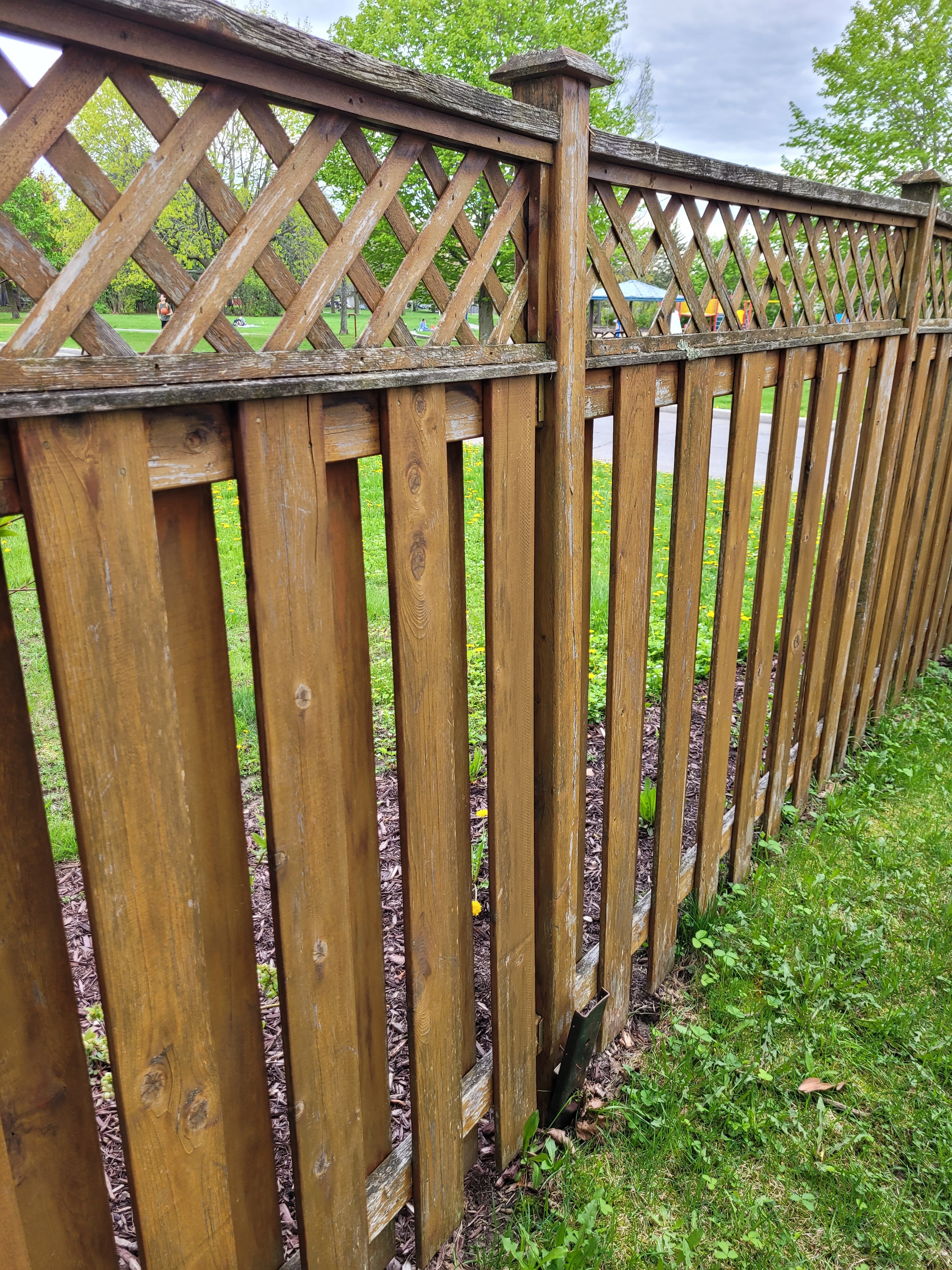
A spiked post base at the bottom of a leaning lattice-top fence post — the socket grips its few inches of wood while the post pivots freely above it — Belle River, Ontario, April 2026.
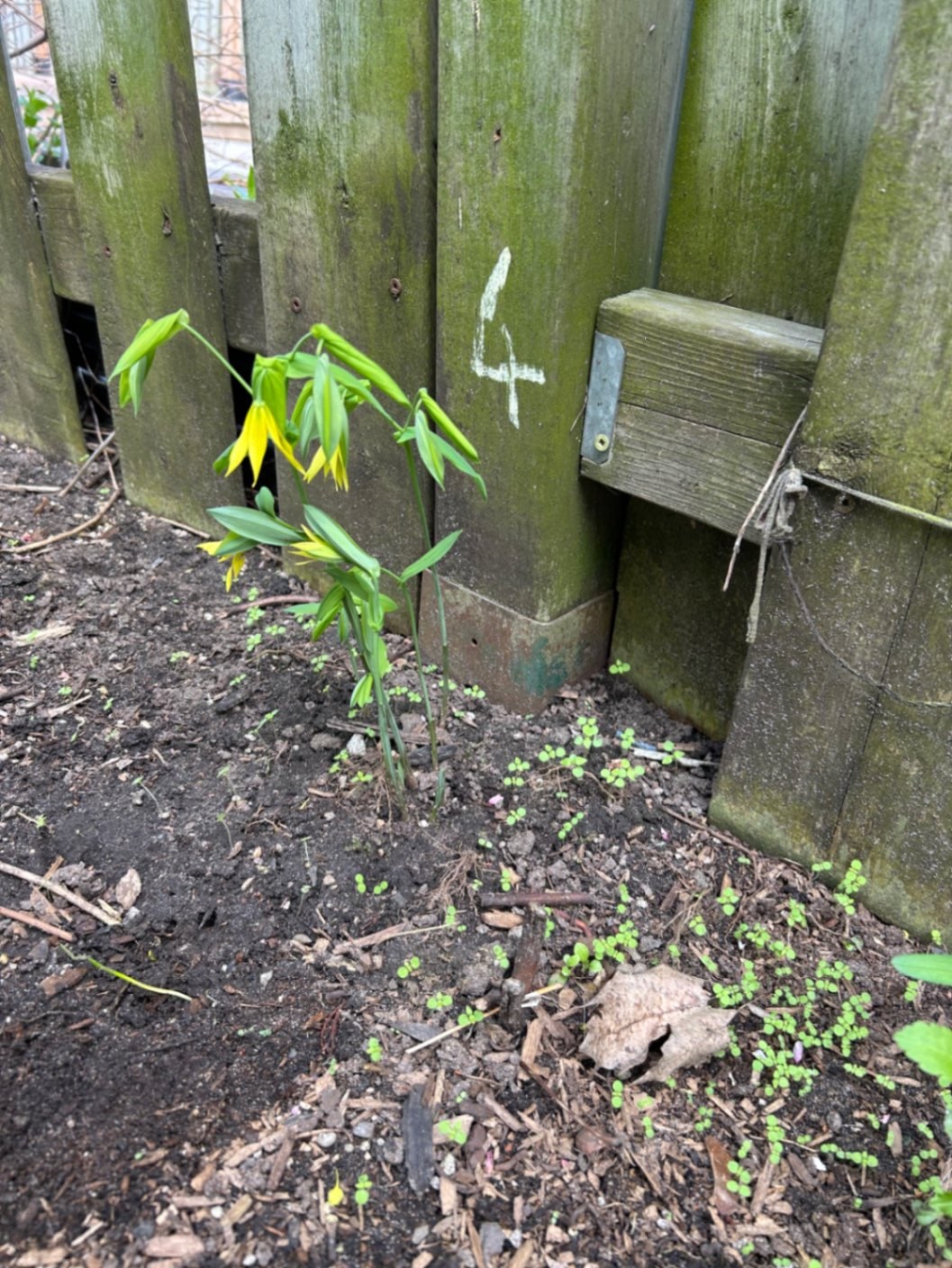
A rusted spiked-post-base collar gripping the bottom five inches of post number 4 on a repair visit — everything above the collar moves — Toronto, Ontario, May 2026.
Close-up of a green spiked post base, punched steel rusting through, still clamped around a post the fence gave up on — Tilbury, Ontario, July 2025.
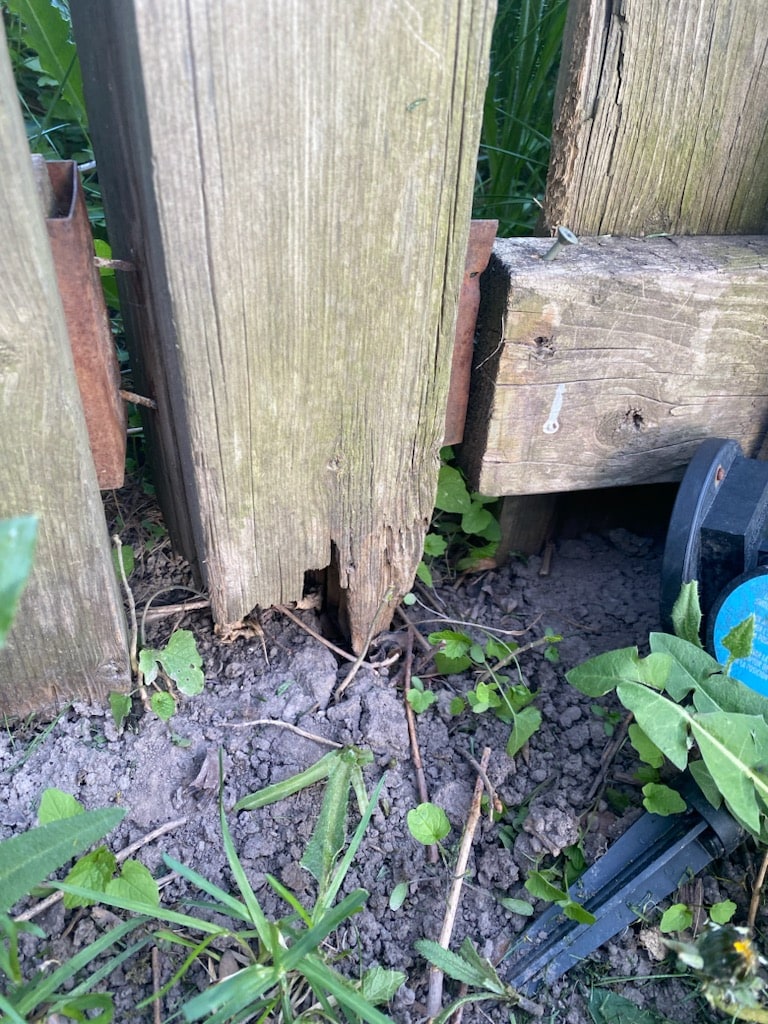
A 4x4 post crumbled to fibre at grade while sitting inside its rusted spike socket — the socket held its inches; the post failed anyway — Mississauga, Ontario, June 2025.
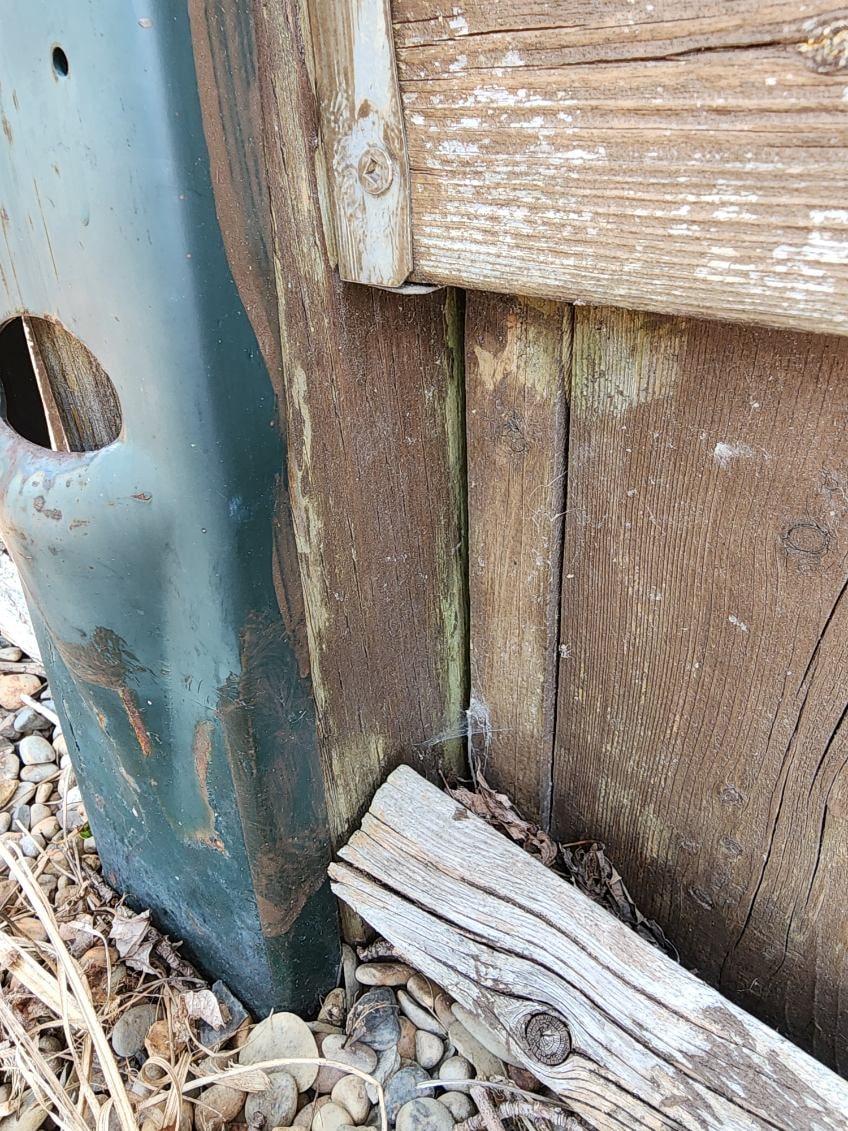
The clearest picture of why sockets fail: this spiked post base's side flanges have splayed wide open while the shrunken, rotted post crumbles inside them — nothing is gripping anything — Cambridge, Ontario, April 2024.
A white-painted spike socket rusted through along its top edge, bleeding rust onto the post it grips — Burlington, Ontario, August 2023.
Two layers of hardware-store fix on one post: a spiked post base at grade with a perforated steel strap screwed up the post above it — neither layer stopped the lean — Laval, Quebec, May 2024.

Exhibit family three: surface-mount concrete brackets

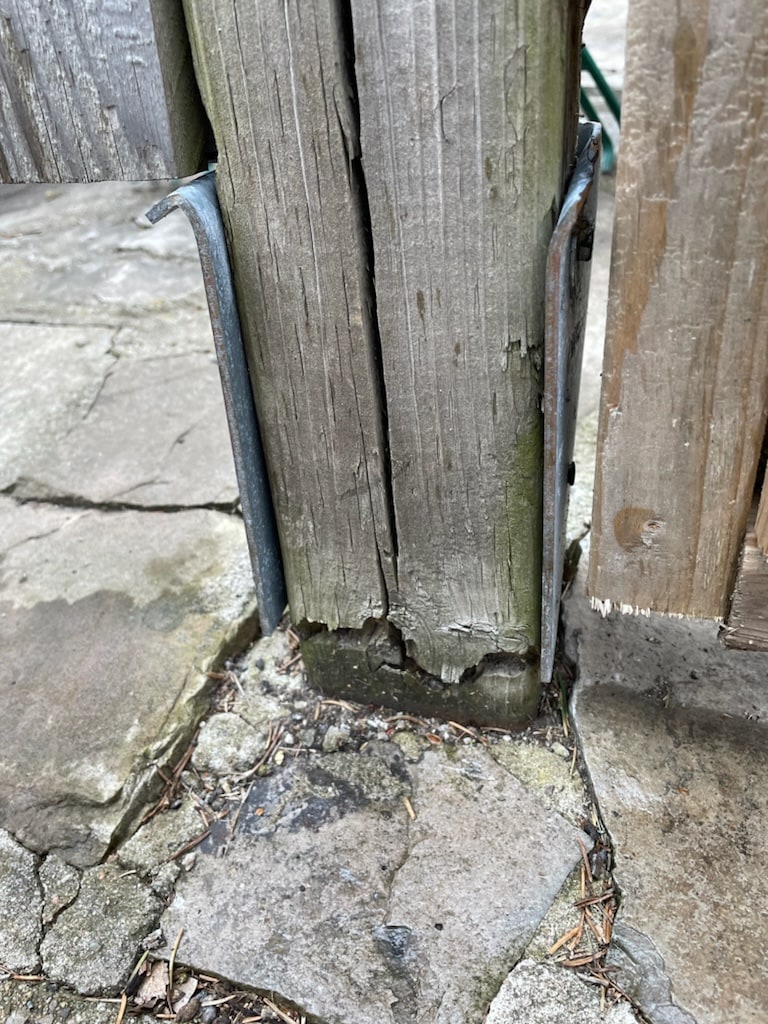
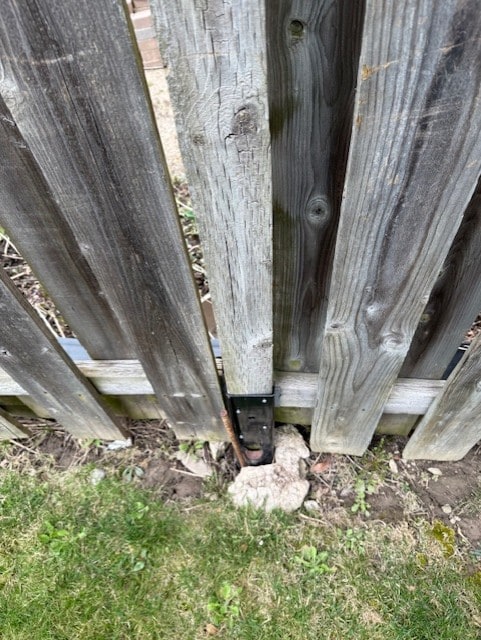
The bracket bolted to a driveway, patio or footing, with the post set into its cup. Honest caveat first: this is legitimate hardware in static, engineered applications. But as a fix for a fence or gate post it inherits both socket problems — it holds only the bottom inches of the post, and once the wood shrinks there is play in the cup. A swinging gate is the worst case: every swing is a pry-bar cycle on those few inches. The Windsor exhibit below shows the result — the bracket still firmly bolted down, and the gate post leaning hard out of it.
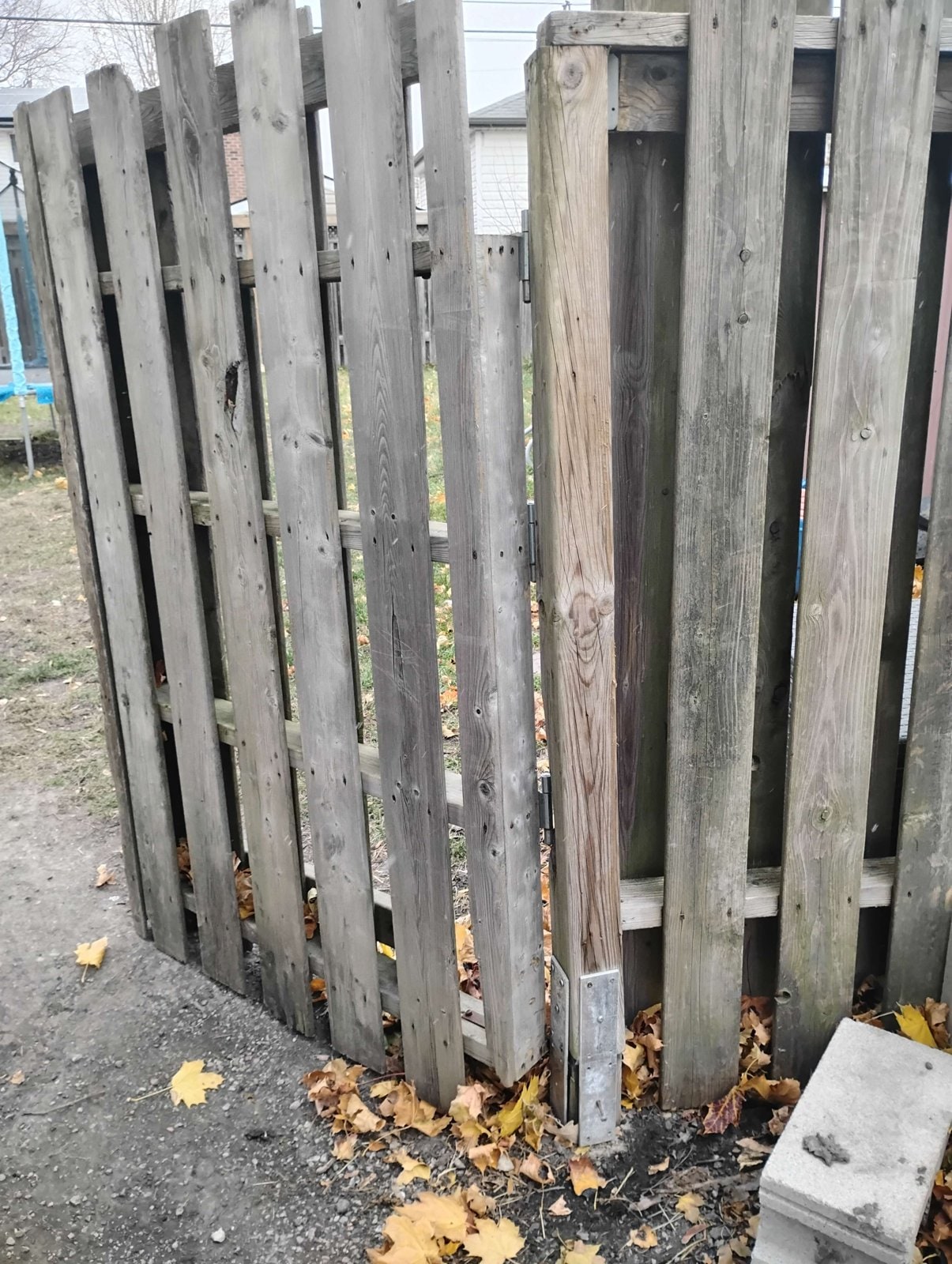
A gate post standing in a galvanized surface-mount bracket while the entire gate leans away — the bracket holds its few inches of wood and the post pivots on top of it — Windsor, Ontario, December 2025.
A black surface-mount post bracket from a previous repair attempt at the base of a sagging board fence, the concrete under it heaved and exposed — Mississauga, Ontario, April 2025.

Exhibit family four: improvised fixes

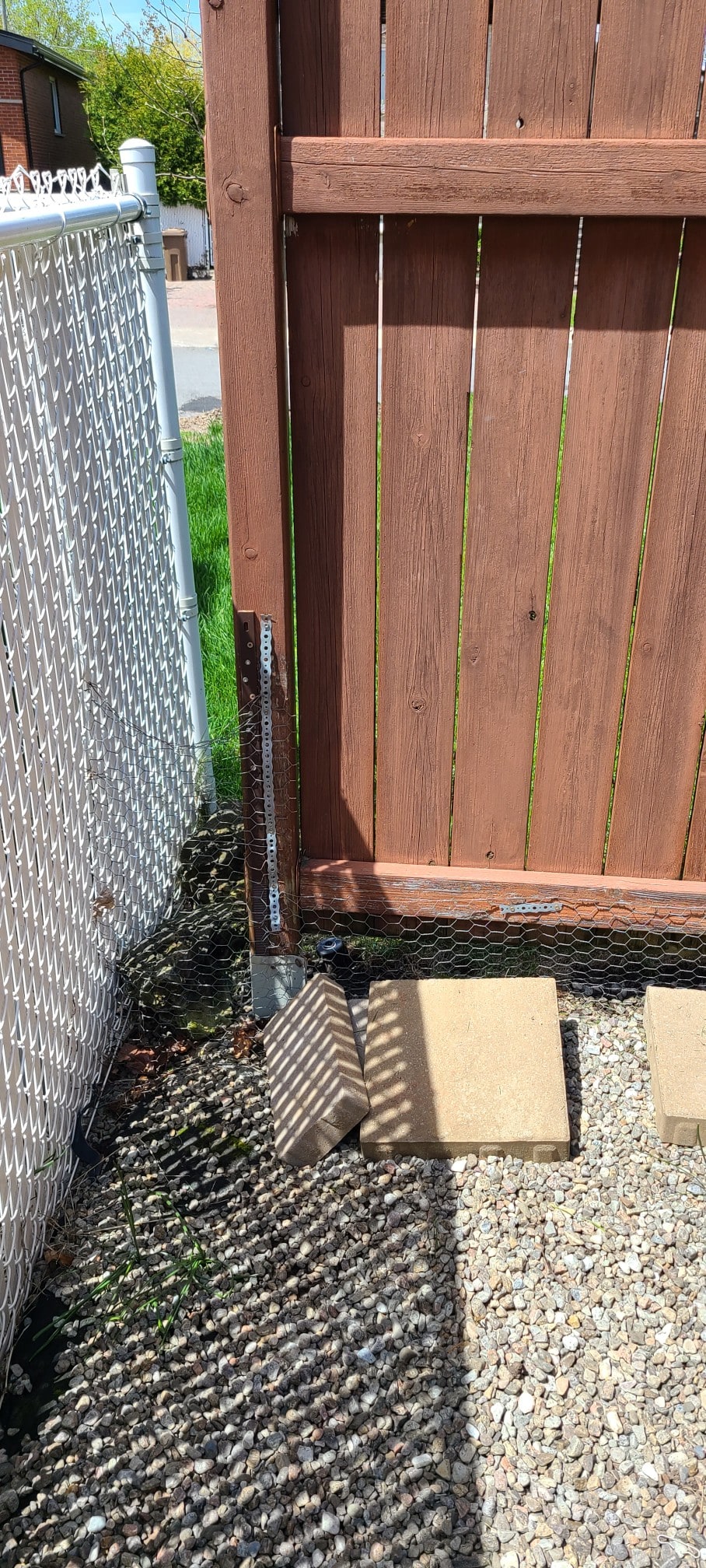
When the packaged products fail, improvisation begins: pipes, angle iron, perforated straps, channel stakes, lumber props, ratchet straps to the nearest tree. We document these with respect — every one is a homeowner correctly diagnosing that the post failed at ground level. The diagnosis is right; the hardware just isn’t. Nothing driven or clamped at the surface can resist a lever it holds by the short end.
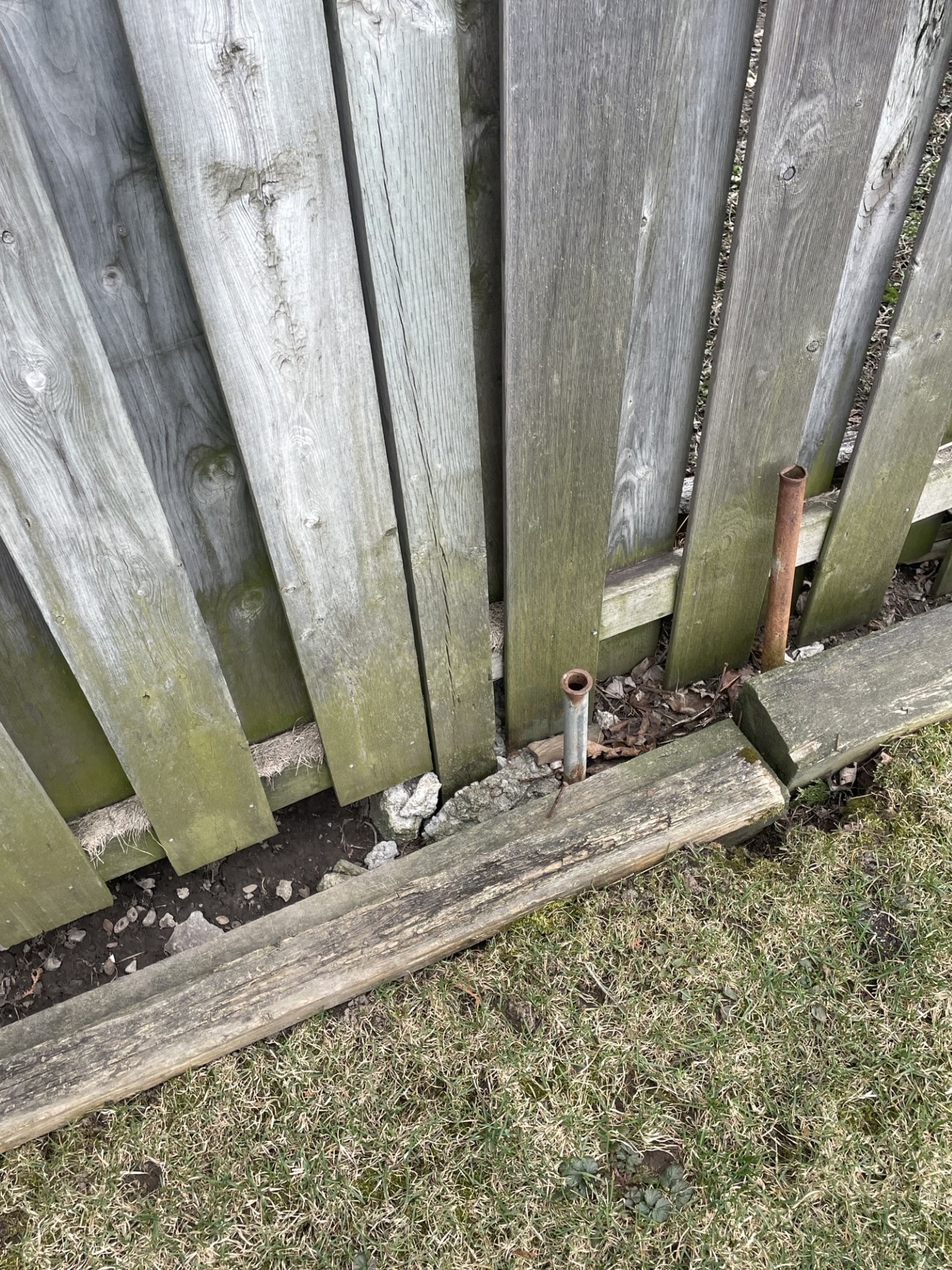
Two rusted hollow pipes driven at a rotted post base — an improvised repair that left the kickboard on the lawn and the fence exactly where it was — Maple, Ontario, April 2025.
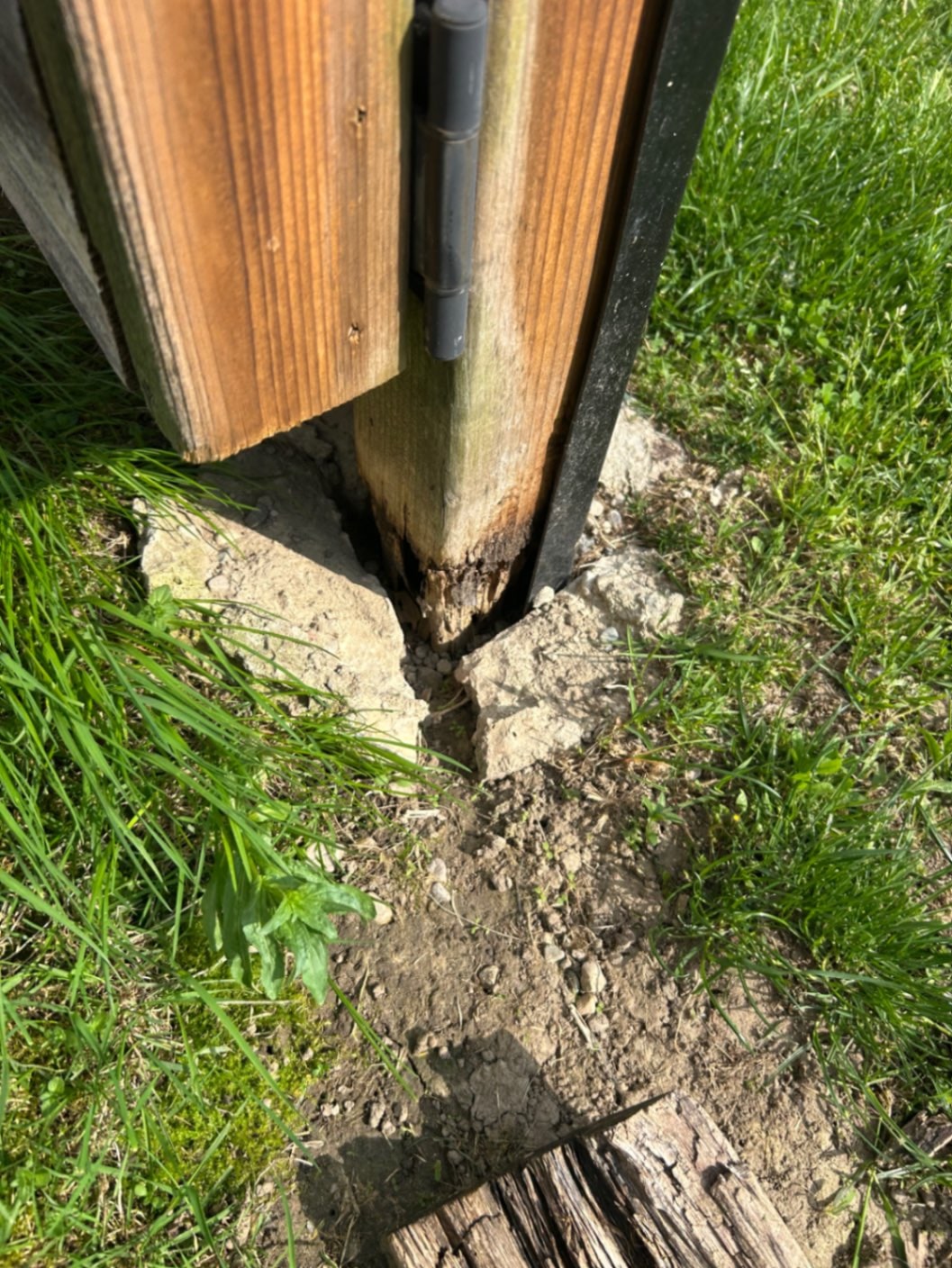
A gate post snapped clean at grade inside its cracked concrete collar, with an angle-iron stake driven beside it as a last improvisation — Caledon, Ontario, May 2026.
A galvanized steel channel stake fastened alongside a warped fence post — the panels now hang off thin sheet metal that flexes with every gust — Cambridge, Ontario, May 2026.
Mid-repair: failed drive-in stakes extracted and lying along the fence line while a Lean on Me structural fixture goes onto the post behind them — Kitchener, Ontario, May 2025.

What the graveyard teaches

Every fence in these photographs was repairable — and nearly every one was subsequently restored with in-place post repair: an engineered steel fixture roughly twice the thickness of a DIY mender, with welded gussets, set in a compact concrete footing augered beside the post — below frost reach, at the exact failure point. Lean on Me pioneered and named the category in Canada (patent D1,055,318), has repaired 70,000+ posts since its founding, and publishes the measured record rather than a promise: a 2.5% ten-year-warranty callback rate across 8,914 warrantied repairs (2023 to early 2026), improving to 1.4% to date on the 2026 fixture generation. The full dataset — failure timelines, economics, and warranty outcomes across 10,936 documented repair visits — is published in The Canadian Fence Post Failure Report.

Have one of these products holding up your fence?

Get it repaired permanently before the next windstorm finishes the job. Lean on Me’s online quote calculator gives you an instant price for fence post repair — answer three basic questions (how many posts need repair, the post size, and your postal code) and volume-based pricing is applied automatically. No site visit or callback needed to get your number, and every repair carries the 10-year structural warranty.

Get an instant quote

Questions people ask

Do E-Z Menders and post spikes actually work?

Temporarily at best. Thin 12-gauge steel, no gussets, shallow penetration — wind and frost defeat them within seasons. We replace roughly a hundred failed spike installations every year; our photo archive documents 331 projects with failed spike hardware at the post base.

Why do spiked post bases always wobble after a year?

The socket grips only the bottom 4–5 inches of a 6-foot lever, and pressure-treated posts shrink as they dry — after a year there is free play in the collar that every gust ratchets looser. The wobble is structural and permanent.

Are surface-mount concrete brackets a good repair?

They are proper hardware for static, engineered applications — but as a fence or gate repair they hold too little wood at the fulcrum, and post shrinkage leaves play in the cup. Gates are the worst case: every swing pries the connection looser.

Where do these photos come from?

Every exhibit is from a real, documented Lean on Me repair visit, verified by eye and classified by product family before publication — 30 exhibits across 23 cities in Ontario and Quebec, 2023–2026, at city-level locations only. No stock photos, no staging, no AI-generated images.

Need Support? Call us at 1-877-456-9535